Welcome!

Welcome!

Wednesday, February 4, 2015

特別ポスト - ECA (英語基礎表現) II (Super A): Leaving Home, Going Home (Part 2)

Hello!


How are you? Here's a little more to add to the Leaving Home, Going Home collection - two great writings from the viewpoints of NGOs and workers about what refugees need when they arrive in Japan. Let's take a look at these! What do people in NGOs think and how two they feel about their efforts in relation to their communities?

File:Evstafiev-travnik-refugees.jpg


I think that the answers of questions are so many, so in this paper, I will list four factors which seem to be needed for refugees. First of all, they would need the information to live in Japan. For example, how to find the houses to live, buy foods, wash their clothes and count the money in Japan. The second they would need is the companies to advise each other. In the group, they can talk about any alert and learn how to live comfortably, and be relaxed. The third one would be the language skill of Japanese. It let them live in Japan without too much care that NGO cannot do and make their lives easier. But I think teaching Japanese is out of work of NGO because teaching acquires the high level of knowledge and skill of plane expression. If I were the worker in the NGO office, I would look for the group teaching Japanese voluntary. The fourth ones are important for refugees to continue living in Japan. Those are supports to make them get jobs and let their children go to school.

Now, I wrote about what refugees need for their lives. But there is more important factor. It is for Japanese. Japanese who live with them would need some help to have communication with refugees. So it must be needed that spreading information about refugees to Japanese to get rid of alert that Japanese has. Those Japanese must be afraid of new comers from foreign countries. 

At last, to do all these factors, NGO workers have to try and connect with other diverse communities in Japan like local-governmental bodies, schools, plants or offices, voluntary groups and so on. To support refugees' lives is not only for work of NGO but all of our communities, groups and organizations in Japan. 


That was fantastic! Now let's look at one more: 

As a staff working with refugees, I think helping refugees is not just a matter of just help them buy an airline ticket. They need almost everything when they came to Japan. First, they need a house to live. Our refugee agency is sending stoves, fuel, blankets and warm clothing to them. We will help refugees pay rent and pre-fabricated shelters are also being considered for all of them. But we just want to say it has huge concerns for the estimated at least 1 million people displaced inside their own country – many without food or shelter. Our aid agencies are managing to try our best to help them. We expect that figure to double to 700,000 by the end of this year. Most of those fleeing arrive with nothing more than their clothes, many are young children, and now winter is coming. Winter is the hardest season for refugees.


It is awful to be a refugee, it's awful to live in a tent, imagine if you have to live in a tent when it's freezing and windy and cold and wet outside, so we want to make sure that at least the situation is liveable for people who have no other choice. Survival is their only option. Our agency are also sending medical supplies, equipment and basic emergency supplies, water, sanitation, and education for refugees to help them live better in Japan. We have also fed more refugees in Japan. Their hope is to provide food assistance to 6 and a half million by the end of the year. You can help us achieve this goal with an online donation and thank you for supporting our work, by calling the number on our website. It’s our moral duty to help them to start a new life in Japan. They are homeless and often with just the clothes on their backs. Giving a helping hand to people in need is encouraged and welcomed in our society all the time.  

How true! 

So once again - thank you for being my students and I hope we can learn together again in the future. I have learned much more from all of you than what I have hoped to teach you. 

So see you around from April! Take care!

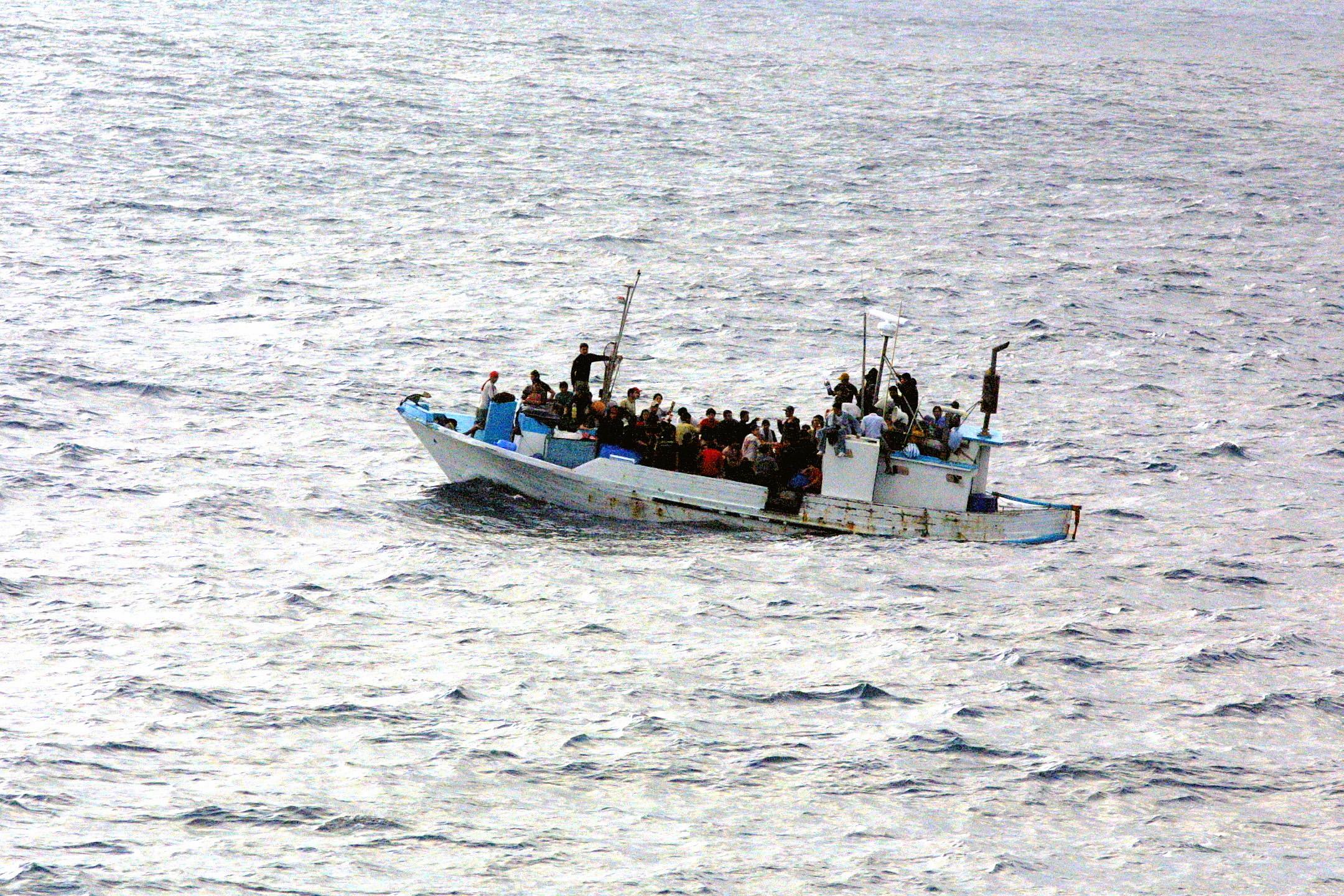
Images: Top - from http://commons.wikimedia.org/wiki/File:Refugees_on_a_boat.jpg#mediaviewer/File:Refugees_on_a_boat.jpg/People in front of house - http://commons.wikimedia.org/wiki/File:Evstafiev-travnik-refugees.jpg#mediaviewer/File:Evstafiev-travnik-refugees.jpg/Boy-http://commons.wikimedia.org/wiki/File:Asylbewerber_-_15.jpg#mediaviewer/File:Asylbewerber_-_15.jpg/All images from Wikimedia Commons. I do not own the rights to these images. Uploaded for educational purposes only
特別ポスト - ECA (英語基礎表現) II (Super A): Leaving Home, Going Home (Part 1)

Hello!


File:Evstafiev-travnik-refugees.jpg

How are you?
This is a late post but I thought I should still write it.

This is another great collection of your writing about refugees (難民). Take a look at these! Please feel proud of your work and what you did on it. I know I am!

I call this collection Leaving Home, Going Home. It's about refugees leaving where they came from - "leaving home" - only to go to a new home - so, "going home." In this case, you imagined refugees coming to Japan as their new home, and reflecting on it if they are already here.

It's a difficult and painful time for them to leave where they came from knowing that they can never go back, and to go to places that they don't know but that will become their new homes. So here is the collection. Be proud of what you've done - and enjoy your work!


I am in the hospital now. Because I undergo an examination to go to Japan. Not only me but also my family undergo it. In other words, my family and I are doing to move Japan. My family is my father, mother and one sister. Only I haven’t finished an examination yet. I’m afraid of an injection. I wish I’m not injected.

Moving to Japan is sad. Because we are leaving our hometown soon. Also I must make my farewells to my friends. I don’t know when we can meet again. I received letters and pictures from my friends yesterday. They are my important treasures. Although leaving my hometown is sad very much, I am looking forward to living Japan. I think Japan is a beautiful country, I want to learn Japanese culture and I’m interested in Japanese. Japan seems a fun country. However I have a question. “Is Japan a beautiful country?” I have been told about Japan from my parents. “Wars aren’t happened in Japan. Japanese environment is good and Japan is a developed country. But there are some troubles even Japan. They are relations to other countries, political problems, homeless and so on.” Although it’s difficult for me to understand them, I’ll learn about them.

That was a great one! Now let's look at another: 

I feel very depressed at this moment on the boat. I usually don't get sea-sick, but I feel like I'm about to throw up. Too many people on one boat. I see some girls crying, grabbing mother’s sleeves. Some adults are singing the national anthem for not to forget our mother country. I didn't want to leave my country. I asked my girlfriend, well, my 'ex' girlfriend to come with me, but she said "no". Here I am. Standing on the boat with my pals, sharing our least moist cigarettes.

Few of my pals are very pumped up and excited to go to Japan, but I'm not. Is it because of my ex, or my anti-fish? I don't know. I guess I'd have to start very slowly to get used to new cultures. I'm feeling melancholic. I don't care how my life's going to be. I don't mind living in the city or country. I don't mind living with ten other people in one tiny room. My only wish is only her. Oh boy... I can't swim.

Another great one! Here's another:

I’m 76 years old now. That story is when I was 40 years old. My wife is gone, because my wife was dead by war. I’m so sad and I can’t live without the wife. But I have to live. So I escaped my country seven years ago. I saving money now, because I’m hoping to go to Japan, and I want to have private business. I have two children, who is one boy and one girl. My job is making traditional things. So I want to know a lot of people that what kind of my job and what is the traditional things. My country’s traditional things are textile and ceramic ware. It is my pride to make traditional things. I go to unknown country called japan and want to spread this traditional quality.

When I was 40 years old, I got a visa to go to Japan at last. Children were delight with me, but we were full of uneasiness. We tanked people who were taken care of so far and on the day to go to Japan, went to the airport. We boarded an airplane. When we arrived at Japan at the first time, it was very cold and it snowed in winter. We were so surprised because we saw snow for the first time. There was our house in the place called Azabu. There was the town which was quiet and seemed to be safe. When we opened the shop, Japanese people were interested in and they saw it. Article and we. Five years later, I thought Japanese people is so kind but introverted and so negative. Some people is positive but almost negative. But now, we are used to life in Japan and live happily. We love Japan. My job and life is success!!


Very good - with incredible feeling! Here's one more: 

I am five years old, and my name is Brian. I am going to go Japan as refugee. I have two feelings. First, I am exciting to go Japan, because I can get more comfortable new life. Second, I am nervous and sad, because I cannot speak Japanese, so I am afraid of communicate with Japanese. I want to make friends, but maybe it is difficult. Also I have some friends in my country, but I have to say good bye to my friends. And I do not have enough knowledge about Japan. These are my feelings.

When I get used to new life in Japan, I want to help people like me, and I will study hard to protect my parents. Then I will get more good new life. Maybe I think I will get many difficult and hard things in Japan, but I am with a strong feeling.

Great! Now let's read some more:

I am Joel. I was live in South America. I am a boy of a big “family.” I don’t want to say that word, but this is the real. We were refugee. There were more than 10 families live in a big simple house. The house and the furniture were simple than the Amish people. Our things were all simple. We didn’t have right in this area of our country. If we want to have freedom, we had to immigrate. Although we had never starved, our foods were simple, too. Almost everyday, we had the same meal. But that time, I was so young that I had never thought the life was bad. I thought that I have a big house to live, a big meal to eat, a big family I have. I was satisfied. But the adults didn’t think so. They prepare to immigrate to freedom world everyday. They went out to find a big boat that maybe can transport five of our big families.

The destined day came. We left our country without being noticed. We took the boat and the boat went forward. Went forward to an unknown place. I was sentimental because I left my hometown. But there were a hopeful eye appeared on other people. I couldn't understand why, until I grew up. 

I didn't know how many days and nights we had gone through. We arrived at a whole new place. Only one thing I know that the place was very far from my hometown. They called the place Japan. And the beginning of our life was not so easy. Because we were foreigner, the things we could only do was the part-time job. And we couldn't speak Japanese at that time, so we could just do the job which the salary was very cheap. But my parents worked hard to earn tuition fee to let me go school because they wanted to give me good future in Japan. I didn't know why but very strange. I studied Japanese hard and now I am a university student. After I graduate the university successfully, it is my turn to give my parents happiness life. 

A moving one. Here's another:

I choose the first picture. I was a little boy. I lived with my mother. Of course, I had a father, but I did not remember well. He went to the other country when I was two years. My mother told me to move to Japan next week, but I did not know why. She did not tell me. I knew Japan is good place. People were king, environment was good and food was delicious, maybe. When I arrived at Japan, I wanted to make many friends and played with them. I wanted to live with mother in a big house and studied hard.

When I arrived at Japan, there were many people in the airport. I followed mother and rode on a taxi. After few minutes, it stopped in front of an apartment. We rose to third floor and mother pushed the intercom. Then, a man came. Surprisingly, he was my father! He worked in Japan! I could live with parents!!

Now, I go to kindergarten. My Japanese improve day by day and I have many friends. My life is wonderful!

I have no doubt there are stories like these from refugees. 

I have been proud and happy to work with you over this year. It's been a big year for all of you. I hope I can have you as students in the future and will want to watch you grow as people in your time at Seigakuin.

Have a great spring break - and see you around in April!

Friday, January 16, 2015

特別ポスト - ECA (英語基礎表現) II (Super A): final writing assignment support (Part 2)/期末作文サポート (Part 2)

Hello!


How are you? My apologies to all of you first - I have had so little time! I could only do a 'Part 1' post last night because I had no more time to make a longer one! I'm doing this post quickly as well.

I have searched around on the Internet, but I have had almost no time to make any more links. I will post what I have here. 

So for those of you I did not write to last night, here are some comment and recommendations for your topics, and some reminders to you of the comments I made yesterday:

Hana:
In your paper on comparing Japanese and American food, I have two links for you here and here - you might want to check them out. You might want to compare the origins of these two kinds of dishes in the links to see what they might have in common.

Maya:
In your topic about comparing expressions of respect in Japanese and English, you might want to focus on the contrast between the numerous set expressions of respect in Japanese and the confusion of variety in expressing respect in English.

Hirano-san:
About your topic of comparing your favorite movies, you might want to go into the style of direction in the two films - how the pacing or the flow of action is different between the two movies, and how or why you think they are as entertaining as they are to you because of the direction.

En:
You have a difficult, but interesting topic. It's hard for me to know what to say to support you - though I think it's a great idea. Your basic idea is how one thing that is different from another thing can survive and develop well from it. You saw the example of the lotus in the picture - maybe you can find other examples of flowers or things in nature that grow in what might be dangerous places or under dangerous conditions.

Yui:
You are comparing Hokkaido and Okinawa, which can be interesting. To give focus to your topic, you might want to show how both places are outliers in Japan - that means they have been outside of the main areas of development of Japan and have sub-cultures that are different from the Kanto or Kansai. So focus on points of culture and maybe even language - how the Japanese language in Hokkaido and Okinawan are different from standard Japanese, for example, with some examples of some phrases or expressions.

I know I could not find many links (except for Hana), but this is all the time I have. I hope my comments can help you in your focus. Good luck on your papers and I'll look forward to getting them next week.

See you then!


Image: "Process Word" (courtesy of Stuart Miles)/FreeDigitalPhotos.net

Thursday, January 15, 2015

特別ポスト - ECA (英語基礎表現) II (Super A): final writing assignment support (Part 1)/期末作文サポート (Part 1)

Hello!


How are you? Here is a Part 1 of some links I can give some of you in support for your final writing projects. (I haven't had any time to find things for all of you tonight, so this is why this is a 'Part 1' post! Part 2 will be tomorrow night!)

Sanchio:
Check these two links out here and here for your topic about Nelson Mandela. You might find them very useful. The first is in French, and the second comes from the U.S. 

Kyosuke:
You might find this link here very interesting about one American car that influenced a generation of car design in a number of countries in the 1960s.

Julia:
Here is a blog you might find interesting with a question posted on it asking about differences between Chinese and Japanese food. Check out the responses to it.

Nanami:
Check this link to the Japan Meterological Agency's (気象庁) website. If you search around in it, you should be able to find some historical high and low temperatures for the areas you are writing about.

Tooru:
This was hard to find anything on, so this is the best I could do. Try this link here about Japanese who are trying to help Cambodians revive Khmer pottery. It's different from your topic but you might find a connection that is interesting. 

I hope these can help you. To the others in the class - I will post for you in Part 2 tomorrow night!

Good luck! See you next week!

Image: "Shop sign, Shinjuku" (personal image). All rights reserved. 

Monday, January 12, 2015

週13・14 - ECA (Speaking) I (J & D): 話と言うことポスターの例え

Hello!


How are you? Here is another supporting post for you about story presentation posters. The picture at the top here comes from a student poster from last year. Isn't it great?


These are examples of some story posters. Here is the poster with the picture at the top: 


Here's another one, in two parts. It doesn't use the pictures like the ones I have uploaded on the blogpost I showed you last week, but students' own pictures:


That was a great one! Now here's another with the same kinds of pictures I have in the blogpost from last week! 


That's an interesting one! There are many I could show here, but I thought I would give some small examples of student work. 

Take care! See you next time!

Thursday, January 8, 2015

特別ポスト - ECA (英語基礎表現) II (Super A): final writing assignment/期末作文

Hello,


Happy New Year! How are you? Today I will show you the final writing assignment (期末作文).

For your final assignment, choose one (1) of the following:


1. Compare and contrast (比較対照) two things - two periods of fashion (for example, 1970s fashion with 1980s fashion), two places, pieces of music, or two TV programs or movies you have seen that you feel are interesting, special, or unique.


Rules: whatever you select, you must let me know by no later than next week (1/15) what you are doing - bring a laptop computer, tablet or mobile device (Smartphone or cell phone) with links or uploads of what you have selected (like pictures from the Internet, or YouTube videos). 


In your writing, first show the two things, and show what they have in common or connection. Then go into the details about how they compare and contrast (比較対照) - you could show how one thing is better than the other, but it does not have to be about how one is good or the other bad. It could be how they are different and what qualities or character you find interesting, unique, or special about them. Finally, you can show what you like, and which you prefer (like better).  

2. Write about a person you respect or admire - like family members, friends, or famous people.


Rules: whomever you choose, you must let me know by no later than next week (1/15) who you are writing about. Tell me a little about the person and give me an idea about how you feel about him or her. 

In your writing, first go into detail about what connection you have with that person. For example, which family member is the person? Where did you first meet the friend? When and how did you find out about the famous person? Go into detail about what you respect or admire about the person. Think of a situation or story about the person that shows what you believe makes the person great. Finally, show what you have learned from the person that you want to try and live by in your own life. 


3. Write about another issue to do with the global topics we wrote about in our 6th writing assignment (作文6) - especially something that impacts Japan in some way, and especially in areas such as society, education, or work. 


Rules: whatever topic you choose, let me know by no later than next week (1/15) what you will write about. Find some information from the Internet to support your topic. 

In your writing, first show what the issue or situation is, and where it began or how it became the issue it has become. From there, you can write your opinion about your subject - but show support for your opinion and how it has become the issue with the impact it has in Japan. Finally, show where you feel you are in the issue. Does it impact your future? Will it shape your decisions about where or how you will live, or even if it might affect when and how (and even if) you will have a family? 


While this could be a heavy issue and if you have sensitive feelings about it that are hard to write or even think about, it could also be something positive. Not all the changes that are happening in our society are negative, and it may even make the future better. So think about it in this way too!


About the writing itself - here is what I will look for:


In whichever choice you write about above - #1, 2, or 3 - your must write a 3-4 paragraph paper.  


Your papers must have correct formatting, with correct spacing. I have shown you this before, but if you need a refresher you can check this blog or ask me. 


Your papers must have titles.


Your papers must have your name, date and the name of the class on it.


Your writing must have long sentences, with connecting words (andbutorsobecauseなど).


*Very important - your paragraphs should be long. Do not make them too short!


Good luck on this assignment! I believe you will do well on whichever you choose. Write to the very best you can, because I will gather your writing into more collections to be uploaded to this blog!


Images: Top - "Circular Workflow Chart" (courtesy of basketman)/Flower - "Pink Lotus" (courtesy of seaskylab)/Girl - "Smiling Girl With The Milk Glass" (courtesy of imagerymajestic)/Graffiti - personal image/All images except graffiti photo courtesy of FreeDigitalPhotos.net. All rights reserved for personal image.

特別ポスト - ECA (英語基礎表現) II (Super A): Words on Music

Hello,


How are you? Here I will introduce some of your writing that will go into a collection called Words on Music. It's writing on the pieces of music such as the ones you have done. 

I hope you can enjoy this writing again. I was very impressed with what many of you did in writing about music from Jacques Loussier's version of Bach's Siciliano in G Minor. Here is the music from YouTube once again: 


Now here are some selections you wrote about this music:

The main melody was very beautiful but sad. I felt the sound of piano fantastic, and I also felt something mysterious. It brought me to the world of fantasy, separated from the reality. It made me imagine the story.

In a small town in Austria, there was the calm lake floating some red lotuses. It was in the park far from any buildings, and it was near the forests. The silence controlled the all-time in the park. The place was not warm but little bit cold. The season was early spring. No one was there but a crying young girl sitting on the bench in front of the lake. She looked twelve or thirteen. Her face was pain badly because she lost her favorite clarinet given by her grandmother. She would often play the clarinet in the park and she loved the time passed so slowly.

She knew that she had to go home and tell her grandmother the truth. But she was reluctant to do so then. She did not want to see the sad face of her grandmother and did not have any courage confessing her mistakes. So she wanted to stay in the place any one was not. Only stars knew where she was and what made her cry and stars were shining for her for a long time.

That's fantastic! Here's another:

One teenage girl had sad something, and she escaped her house garden. Soon she was in deep forest.

She ran and ran in the forest, and she got tired. She felt that this forest was maze and lost. She was alone and got sad. However, she thought happy, because she could forget her troubles. At that time, she heard something noise at back little trees. And she turned around. There were little rabbits and they stared at her, because it was strange and nobody have never come in the deep forest, so rabbits were think that today is a special day. Rabbits called to many animals. The many animals were guide to center of the forest. She could see many rabbits, birds, lions, snakes, horses, wolfs, hyenas, elephants and more many kinds animals. She was welcomed. Then, they were enjoyed the party. They ate cakes and drank elegant fruit tea. Then they danced together with splendor music all night. They had a good time. She completely forgot her troubles, and noticed that here is my place to live.

After that, she loved this forest and animals, so she decided that lived in here. They still living with and happy.

Great! Let's check out another: 

Once upon a time, a family lived in the big residence in the forest. The family members were father, mother, daughter and a few dogs. They looked happy and the house full of a laughing voice every day. However, since all of them passed away, around the residence became quiet. The building also became sad.

One day, big storm came to the forest. Because of it, the residence became worse and worse. However, after few years, many plants came up around the residence but also in the residence. A lot of seeds were carried by the storm. Many animals lived in the forest gather this residence and started living in there.


Monday, January 5, 2015

週13・14 - ECA (Speaking) I (J & D): 話と言うこと

Hello,


How are you? Let's look at telling stories with action (話と行うことを言う) with pictures

Activity/homework
Look at these pictures. Make a story with these pictures (イメージに話を作り). (You can use the picture above, at the top of this blogpost!) You can put them in any order you like (イメージの順番がなんでもいい)

Rules (ルール
1. You can use seven (7) of these pictures.
2. You have to tell your story (話すを言う) using words like firstnextthenafter that, and finally.

Try it!


Have fun!
Photo credits: Top photo - "Sunset Holiday" (courtesy of imagerymajestic)/Roofs - "Hiyama Tatsuno Hyogo Prefecture" (courtesy of 663highland)/ 
Images: Top (wedding) - "The Exit" (courtesy of Elwood W. McKay III)/Sunset - "Beautiful Sunset" (courtesy of Photokanok)/Man in suit - "Handsome Young Businessman" (courtesy of imagerymajestic)/Airliner - "Take Off At Sunset" (courtesy of Time Beach)/Young man - "Young Handsome Man" (courtesy of marin)/Poker chips - "Pocket Aces In The Hand" (courtesy of Grant Cochrane)/Sports car - "Classic Porsche 959" (courtesy of M-Pics)/Woman - "Asian Model Woman" (courtesy of posterize)/Drink - "Singapore Sling" (courtesy of Antoine Henrich)/SUV - "Mercedes ML" (courtesy of M-Pics)/All photos from FreeDigitalPhotos.net