Welcome!

Welcome!
Showing posts with label Writing. Show all posts

Thursday, June 15, 2017

電気通信大学 AWE I: Refugees & places・難民と場所

Hello!


How are you? Today let's look at refugees (難民) and the places they come from - and where they may go.

Activity
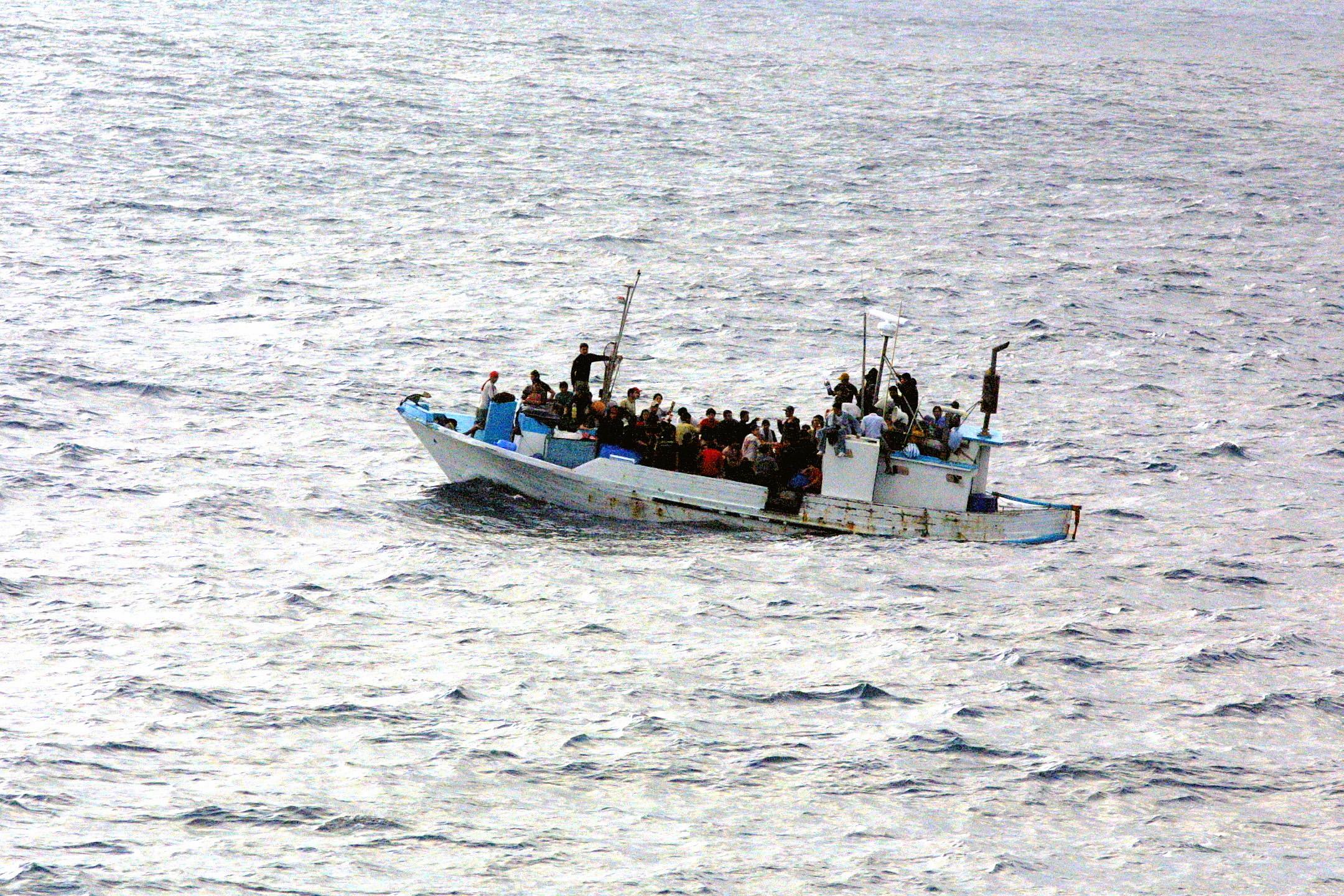
Look at the following four pictures. Who are the people in the pictures? What are they doing? Where are they going? Where might they be coming from? Why can't they continue to live in the places they cone from any more? What are they feeling about leaving, and where they may be going?

Most importantly - what's your opinion of their situations? Make some notes in your notebooks about them.


See you next time!


Images: Top - By Unknown - http://www.columbia.edu/itc/mealac/pritchett/00routesdata/1900_1999/partition/camps/camps.html, Public Domain, https://commons.wikimedia.org/w/index.php?curid=31055700/Boy - http://commons.wikimedia.org/wiki/File:Asylbewerber_-_15.jpg#mediaviewer/File:Asylbewerber_-_15.jpg/Boat - http://commons.wikimedia.org/wiki/File:Refugees_on_a_boat.jpg#mediaviewer/File:Refugees_on_a_boat.jpg/People on grounds - "Evstafiev Travnik refugees" http://commons.wikimedia.org/wiki/File:Evstafiev-travnik-refugees.jpg#mediaviewer/File:Evstafiev-travnik-refugees.jpg/Man with passport and children - by Alemaugil - Own work, Public Domain, https://commons.wikimedia.org/w/index.php?curid=2956803/
All images from Wikimedia Commons. 

電気通信大学 AWE I: Writing assignment 2 (Leaving Home, Going Home)・作文2

Hello!


How are you? Let me show you our 2nd writing assignment - your opinions about refugees (難民), what they need for immigration (移住), and what you think of their chances of Japan as a new location for their lives. 

While I have given you the handout about the assignment, I am posting it here, with the video that will go with the assignment. 

I am gathering writing on his topic into a book called Leaving Home, Going Home - this is a book about student writing on refugee issues. The best of your writing on this topic could go into this book, so write to the best you can!

How much to write 
I would like you to write as much as you can, because your work may be published (出版した) on both this blog and in the Leaving Home, Going Home book.

I would like to see maybe 3-4 paragraphs' worth of writing.

Deadline (締め切り)
It will be June 23nd (6/23), so I want you to bring in a first draft (下書き) next week (来週) in your notebooks in pencil. Then you can write to the finish and turn in your work on 6/23.

Preparation (準備)
Refugees have many problems, and many things they need. Watch this video. It's mostly in Japanese, but with some English, with Japanese subtitles  (日本語の字幕). 

Watch the video as many times as you need to. When you are finished, answer these questions in your notebook about the different parts of the video (you can make notes in English or Japanese):

日本のメッセージ
1. What did the first woman say about coming to Australia as a refugee?
2. What did the second woman say about communication between the government (政府) and refugees?

シンポジウムから待たヒント
What did Ishii-san say about the two women's refugee stories?

日本にできること
What did Moriya-sensei from Hokkaido Educational University (北海道教育大学) say about the needs of refugees?

長野県松本市の取り組み
What did Takizawa-sensei from Toyo Eiwa Women's University graduate school (東洋英和女学院大学大学院) say about help for refugees in Matsumoto city in Nagano (長野県松本市)?

求められる視点
What did Daniel Alkhal (ダニエル・  アルカル ) from the UNHCR (国連難民高等弁務官事務所) say about the three different steps of support refugees need?

Make these notes on the planning and preparation handout I have given you.

Task 
Most important: Choose one (1) of the following:
Make a one-sided argument for why refugees should be allowed to resettle in Japan.
Or - a one-sided argument for why refugees should not be allowed to resettle in Japan.

Now look at your notes. Choose one (1) of the one-sided arguments above and write 3-4 paragraphs.

Good luck! I look forward to reading your great writing about these issues.

Take care!

Image: By Alemaugil - Own work, Public Domain, https://commons.wikimedia.org/w/index.php?curid=2956803
Video uploaded from YouTube. I do not own the rights to the video. Uploaded strictly for educational purposes only. All rights reserved to the
copyright holder(s).

Wednesday, January 18, 2017

ECA (英語基礎表現) II (Super A): Impressions of 3/11 (Part 2)

Hello!


How are you? This is Part 2 of your great collection of writing on the Tohoku earthquake and tsunami of March 11, 2011.

Here's the first one: 

March 11, 2011 was great earthquake in Japan. Really it was very terrible and strange. It was focused in Sendai but in many other places was influenced. Tokyo and near Sendai there was only earthquake but in Sendai there was tsunami and earthquake. More than ten thousand people died and more people were missing. People in Tokyo and other places had not died because there was no tsunami. Tsunami is more dangerous than earthquake. After that earthquake more people become homeless and lost their work and property therefore their condition became very miserable. 

At that time I was not in Japan. I was in my country and I heard the news and read the newspaper, then I was very surprised and became sick. I had been processing my study documents abroad for Japan and I had just gotten the result that it was success. At the same time the great earthquake happened. What to do? Go or not go? I was very confused. All my friends and parents, they suggested me not to go to Japan, there is very dangerous, next time there will have more earthquake there, so please do not go. I was worried and confused, but finally I decided to go to study abroad in Japan, and came here as a foreign student. 

When that great earthquake of March 11 happened, if I had been here or in the area of the earthquake and if I had been saved and in good condition, I first would have informed the police in the police station and phoned the ambulance, then I would have helped the people who had injured and buried inside the houses. More houses had been collapsing and more people had been buried. At this situation, I would have taken them to a safe area and as soon as possible and as soon as fast taken them to the nearest hospital. I would have contributed to the situation of people who were miserable. 

Incredible! Here's another one: 

First, let me introduce myself. I am an 18-year-old girl living in Tohoku. I experienced an earthquake and tsunami on March 11th, 2011. It was a terrible day. I had to make a difficult decision whether to stay in Tohoku, or to leave Tohoku and go somewhere else to start a new life. I think I will want to stay, but at the same time I want to leave. 

There are some reasons I would choose to stay in Tohoku. First, I want to help people who need help with whatever the problem is. For example, serve food to those who do not have enough food, and care about the wounded people. Second, I was born, and grew up in Tohoku, therefore Tohoku is a place where I can be myself and relax. I really like everything of Tohoku. At last, I want to stay with my family members even though some had been victims of the disaster. I was living with my grandmother, grandfather, mother, father, brother, sister, and our dog. Actually, my grandmother and grandfather had been victims. Their bodies are buried near where they used to live. I want to be close to them. I want to be able to see them whenever I feel like it. Therefore, I would want to stay in Tohoku. 

There are some reasons why I want to leave Tohoku and live somewhere else. First, I want to forget about this. Whenever I think of the disaster, I feel very depressed. Even though I still think that I have to remember this and tell stories to those who have not experienced a huge earthquake and a tsunami. If they know what to do, they have a better chance of surviving from the disaster. Second, I want to find a job, make money, then come back. I know that money is not everything, but it is still an important thing. Sometimes, having money can help people. At last, I want to start a new life by taking chance leaving Tohoku. I have been living there for 18 years of my life, and I want to experience some new culture. Therefore, I want to make some new friends and get a job I have never done before. Therefore, I want to leave Tohoku. 

A powerful account. Now here's a very moving one: 

That was like a bad dream. I might show the nightmare. I couldn't think that many of my familiar objects and people disappeared in a few hours. I was not wrong. If I wake up at once, I can see the shop that selling vegetables and fruit, and I can go to the school where many friends are there. Consequently, I couldn't wake up the nightmare, because it is real that there is a tsunami and terrible earthquake.

That came suddenly. It didn't exist anymore. I heard very noisy warning and I was very surprised to it, that it came suddenly. I felt a little shaking. It was the worst and fortunate sign. I realized it was an earthquake at once, because we experienced it many times over. So, we couldn't leave quickly by the way we used to. But, it was long. Normally, it finished a few moments, but it continued a few minutes. The time of something little terrible becoming big that, the biggest earth shaking that I never experienced before came. I couldn't run. My legs didn't stand up strongly, if I ran by force I might fall to the ground. My desk shook, chair moved itself, almost al my books fell down, the sound of dishes were broken came up. I was frightened so much, I escaped to the high place using all my power. After that, I survived, and I lost many things while the moment happened. I want to see the sea for the time being. I remembered the destroyed wave. I can't stand to see that at least now.

I am thinking that until now, that is choosing of my place. I can move far away to not be frightened of the memory of the quake. If I move, I can spend my life easily without my mind's fear. I can get new friends and neighbors, if I can change my mind perfectly so not to have fear and sad. But I also think it is unable to do so. When I close my eyes, the scene of the tsunami appeared in my sight, hear the sound of noisy waves and crying of survived people. I couldn't remove these from my brain, and couldn't do these ever. Finally, I want to forget the memory of the earthquake.

I think another choice. It is I remain here. I couldn't sleep well, because my body scared of the shaking. After a big earthquake, the area often caused small quake. It is in every day and every time. Each time the small one comes, we wake up quickly and escape fast. it is not the problem of the quake big or small. We can't tolerate any shaking whatever the size. Especially, children and elder people can't sleep well. We feel the shaking continues always, although the machines don't find any shaking. It is very stressful to spend life in there. I must be afraid of the disaster coming again. But at first, we didn't think the big disaster came on the place of our living. So can't trust safety of where we live, so I often prepare to escape. I lost a lot of important people and things, but remaining those certainly exist. Of course, it is hard to find jobs in here, and to begin with I have to find my new house. I know it is not easy way to live in here, but I want to live in here. The terror of earthquake is not disappeared for long time, so I must stand it in my life.

An incredible piece of writing, and once again, very moving. 


It's been a pleasure to have all of you as students. I will miss you as I will move on to new jobs from April. So good luck, and don't stop writing!

Thank you!


Image - by Cp9asngf - Own work, CC BY-SA 3.0, https://commons.wikimedia.org/w/index.php?curid=33491717. Courtesy of Wikimedia Commons.

ECA (英語基礎表現) II (Super A): Impressions of 3/11 (Part 1)

Hello!


How are you? Today I would like to upload some of your great writing about the Tohoku earthquake and tsunami of March 11, 2011 in a special post. This is Part 1 of this writing. 

Let's now look at some of these pieces of writing. Here's one:  

In March 11, 2011, earthquakes and tsunami happened in Tohoku areas. If I were a victim of earthquakes and tsunami, I will move away somewhere else briefly. If possible, I want to live in local place for a long time. But if the support reconstruction is not finished, I don't know when disaster happen again and it is dangerous near the sea. It is difficult to live in there, no matter how love the local place. 

As a result, I move away somewhere else, more safe place. It is lonely to leave and live in another place, but someday, when finished support reconstruction, I will return to local place. 

Great! Here's another one:

I think that if we can't live in the hometown that suffering damage, we have to choose to stay there or leave. 

If I choose case to stay, I think that I don't want to leave my hometown. Because there are a lot of memories of my life and I want to cooperate of reconstruction, because most of people are suffered by disaster, they leave their town consequently. Then, who will reconstruct? I want to be safe in my hometown. 

If I were parent, I think to leave hometown, because I have to protect my children from many danger, for example, tsunami, radioactivity leaking from nuclear power plants, hunger and so on. I want children to study if they want. 

Eventually, I have never experienced. It's difficult for me to judge I don't know unless I actually experience damage, but I think I just want to have a safety bag, for my safety.   

Another good one! Now let's look at this one: 

An earthquake occurred in the Tohoku region when I was in junior high school third grade. At that time, I was at school and ran away to the schoolyard. Since I attended a junior high school in Tokyo, the train did not move and I stayed overnight at a junior high school on that day. I knew that an earthquake occurred in Tohoku, but I could not see the news yet. The next morning, my mother came to pick me up at school. I was surprised to see the news after arriving home. So, I learned that a tsunami occurred in Tohoku, and I did not get to know the fact that many damage was caused by nuclear radiation activity. I was only able to TV, many casualties came out in Tohoku by earthquake, tsunami, and nuclear power plant. looking at the news that many people are suffering, I thought that I could do something. It was difficult for me to the Tohoku by helping, so I donated a donation that I want you to work hard for recovery a little. As a result, Tohoku people can live a better life. We should help young people so that people who are suffering from disasters can live the same way even six years from now. 

So true. Now, let's look at a moving story - an imaginary one of a survivor:  

I am a 34-year-old office worker in Miyagi, in Ishinomaki city. My wife "lived" there too. What does "lived" mean? Yes, sadly, she had been killed by tsunami on March 11. She worked at the Ishinomaki city hall. 

At that time, after the earthquake, she and all city hall customers knew what happen next. After the big earthquake, then next comes the big tsunami. They knew about that, so they panicked. But, some survivor of city hall said that she did some brave things. She shouted out to everybody, and she said "Everybody please calm down, the huge tsunami will be here soon. So, we have to move for the roof top. Please move right now." After she said all this, she carried the ball and she carried small child upstairs. Finally, after checking for anybody behind her, then the tsunami came. 

I decided to move with my small son from Miyagi. My son is five years old. He cries every night because he missed his mother. So we have to move on next. Nothing left behind us. Good memory turns to sad memory. My home, my job, my son's school, me and my son's friends…

Everything took over because of the tsunami. We have to rebuild our whole life, without her.  But now, I can't stop thinking of her. So, we have to get out of here. 

Maybe, my wife wants the same thing too. But I never forget about her. 

Very moving.  There will be more in Part 2. 

See you there! 

Image - U.S. Marine Corps photo by Lance Cpl. Garry Welch - This Image was released by the United States Navy with the ID 110320-M-0145H-063 (next).This tag does not indicate the copyright status of the attached work. Courtesy of Wikimedia Commons. Uploaded for classroom purposes only. All rights reserved to the identifiable copyright holder(s). 

Thursday, November 17, 2016

ECA (英語基礎表現) II (Super A): 作文5

Hello!


How are you? Here is a short post about our 5th writing assignment (作文5) - writing about your piece of music

You have already written what you have about each piece of music I played for you in class, and that you heard again from my blogpost. 

Task 
Edit and if you need to, add some more to your writing about the piece of music you chose. Please remember that it must be 2-4 paragraphs long - the longer the better - with characters and a scenario. 

Then, on a separate document, write a short comparison (比較) between the piece of music you chose and another of the pieces of music you heard. Here, you can write about the music itself - what you thought of the sounds, the tempo, even a little about the artists themselves. 

Which was the most interesting? Which was the strangest? Which gave you the most unique impression (感想)?  

Please remember: For your story, build on it and make it as imaginative as you can. Listen to the music you selected again if you have to or want to.

If you want to listen to the pieces of music I played for you, go to this link with the video files here.

I will look for the paragraphs to be typewritten in 12-point size, with correct formatting. Please look at my handout on correct formatting and style!

Good luck - and enjoy finishing up your stories and comparing which pieces of music you liked or thought were the most interesting! Have fun with them! 

The deadline (締め切り) is next week (11/24)!

See you next time!

Image: "Sheet Of Music" (courtesy of xedos4)/FreeDigitalPhotos.net

Thursday, November 10, 2016

ECA (英語基礎表現) II (Super A): 音楽

Hello!


How are you? Today I will show you again the four pieces of music I played for you in class last time before the festival break. Listen to these as many times as you want or need.

We are going to think about what we wrote to this music - and select one piece of music you particularly liked and add more to your writing about it!

Here is the first one:


Here's the second one:


Here is the third one:


Now here is the last one:


What did you think of these pieces of music? 

Activity/homework
Now look at your writing about this music from the first time you heard each one last time. Choose one (1) piece of music you felt was the most interesting to you and add another paragraph about it. Write more about the characters and scenario you had about it, and make it into a little story. 

Have fun with this! I'll look forward to seeing what you wrote about the music you chose to write more about.

See you next time!

Image: personal photograph. All rights reserved.
Videos uploaded from YouTube. I do not own the rights to the videos or the musical compositions. Uploaded for educational purposes only. No copyright infringement intended. All rights reserved to the copyright owner(s). 

Wednesday, October 19, 2016

ECA (英語基礎表現) II (P): 作文4 「健康・幸せ」

Hello!


How are you? Today I will show you our 4th assignment (作文4): writing and showing things that make you healthy and happy!

What makes you happy? Do pets make you happy? Look at the picture above. These are my pets - my dog and two of my cats. They make me happy!

Are there things you do to make yourself healthy and happy? Do you have pets, or play a sport, or have a hobby that helps you to relax?  

So how about you?

For our 4th assignment, we will write and show pictures about things that make us healthy and happy. 

Activity
Look at these pictures and talk about what makes you healthy and happy!


Great (and healthy!) food


Family


Friends


Travel


Sleeping and relaxing

(no picture) 

(Your own idea!)

Homework/extra activity
Scientists have said that dogs, cats and other pets are good for your health too. For people who have disabilities (身体障害者), or have a lot of stress, dogs are good for health. Here's a short video about comfort dogs (セラピードッグ). Watch it! What do you think of it?


Good luck! I look forward to seeing what makes you healthy and happy.

See you next time!

Images: personal photographs. All rights reserved.  
Video uploaded from YouTube. I do not own the rights to the video. Uploaded for educational purposes only. All rights reserved to the copyright holder(s).

ECA (英語基礎表現) II (Super A): 作文4

Hello!


How are you? Today, I will show you our 4th writing assignment (作文4): how to make excuses (詫び) and apologies (申し訳). Our scenario will be about problems in a hotel.

First, this is a sample letter of apology with a difference - some excuses in it. Some of these excuses are a little unbelievable! 


Dear Sir/Madam,

I am the general manager of our hotel. It has come to my attention that you have had a terrible experience at our hotel. Please accept my apologies for your experience.

I have no excuses for our poor performance, but I would like to explain our situation. First, because our front desk manager’s pet penguin has been very sick recently, it has affected his work. In addition, we have had other problems recently with some of our old staff members and we have had to hire and train some new staff. They are still new to their jobs, so they are not as good as we hoped they would be.

In our restaurant, our head chef's cat recently died. He is not married and has no children, so this has been a difficult time for him because his cat was 17 years old. He loved his cat very much, so it has been very hard for him. To make things worse, two of our best waitresses have difficulties in standing for a long time because they have leg and foot problems. One of our vans drove over their feet when they were getting some things out of the back of the van to bring into the restaurant. So, they are getting treatment at the hospital for their problems, but it will be difficult for them for some time.

I cannot show how deeply sorry I am for the bad time you had at our hotel. So please allow me to offer you a free stay at our hotel in the future, when you would like, because we feel terrible for your bad experience. We are working hard to correct our problems and will make a much better experience for you.

Sincerely,

Steven G. Ingaku
General Manager
Ageo Hotel and Resort

Scenario
What I would like you to do is to write a letter of apology, with excuses, about a person's terrible stay at a hotel. Imagine that you are the general manager of the hotel and that you have heard about a person's bad experience at your hotel. 

Make some of your excuses a little unreal - for example, a staff member's dog just died, or the taxi service has changed, or there is a new chef in the hotel restaurant who is strange, or something like that. 

Write 2-3 paragraphs with an opening ("Dear Sir/Madam") and a closing ("Sincerely," and your name). 

Have fun with this! 

See you next time!


Image: "Pillow" (courtesy of mrsiraphol)/FreeDigitalPhotos.net

Wednesday, October 5, 2016

ECA (英語基礎表現) II (Super A): ホテル

Hello!


How are you? Let's think about and write some notes on hotels

Warmup/activity
Which hotel would you like to stay in? Let's look at some pictures of different hotels.

This is the first one - the Marina Bay Sands Hotel in Singapore:


1. 

What do you think of this hotel? 

Now this one is very different - an English village house made into a country hotel

2.

What do you think of it? 

How about this one - a motel on the beach:


3. 

What do you think of this place? 

What about this one? It's a tropical resort in Thailand:


4. 

Would you like to stay here? 

Now - think about all these different hotels and places. Which one would you like to stay in? Write two (2) sentences about the hotel you like. Give some reasons using because

例えば:
I want to stay in hotel #2 because it is very quiet, and looks comfortable and peaceful. I think I can get some good rest in this hotel. 

Have fun!

Photo credits: 1. "Marina Bay Sands Hotel in Singapore" courtesy of posterize/2. "Typical English Village House" courtesy of Stuart Miles/3. "Motel 
Images: Top - personal photograph/1. "Marina Bay Sands Hotel in Singapore" (courtesy of posterize)/2. "Typical English Village House" (courtesy of Stuart Miles)/3. "Motel on the Beach" (courtesy of Aleksandr Kutsayev)/4. Image "Tropical Resort in Thailand" (courtesy of nuchylee)/all images except top photo from FreeDigitalPhotos.net/all rights reserved on personal photograph.

Monday, September 26, 2016

ECA (Speaking) II (A), (英語基礎表現) II (Super A) & (P): 夏休みについて

Hello and welcome back!


How are you? Welcome back to our class for the second semester. 

Let's talk and write about our summers! It would be a nice way to help us remember what we did this summer. 

I had a great summer. I went to Vietnam with a group of teachers and presented at a conference (研究会) and workshop at a university there. Here are some pictures of my trip there:


This was me with my facilitator - a student who just graduated from the university who was very kind to show me around the city where we were. We were in Hue (フエ), the old capital (首都) of Vietnam, and this place is famous in Hue - the Citadel, which was the fort of the old imperial palace (王宮の砦). Here's another picture:


It's an incredible place! I took many pictures!

While many of you had to work part-time jobs and were busy with them, and some of you weren't able to go anywhere, many of you had some good times this summer with friends and family. So what did you do this summer? 


Let's hear about your summers!


Images: Personal photographs. All rights reserved.