Welcome!

Welcome!
Showing posts with label 国連. Show all posts

Sunday, April 21, 2019

東京理科大学 Listening & Speaking 1a: Intro to literary circles - about the United Nations・文学的なディスカション・グループ「国連について」

Hello!


How are you? As I mentioned in class, one important thing we will do with the textbook listening and reading is discuss what we have listened to and read through literary circles (文学的なディスカション・グループ). 

What is a literary circle? It's an idea borrowed from literature (文学) studies, and is a way to know and understand information and content - such as a lecture or a reading - into a way you can more easily know and understand in your own words and ideas. This can be very useful for any science or technology-oriented studies.


Method (方法) 

How does it work? To begin with, literary circles have groups of 3-4 students. Four (4) students make the best circles, but three (3) is possible. 

The literary circle groups in our classes will each have a leader, a summarizer, a details master, and a vocabulary master


Leader

One student is chosen as the leader. He or she makes sure that the other members can stay on task and helps them where is needed, and will ask questions to the other members of the group. 

Summarizer

One student is chosen as the summarizer. He or she writes a short summary (要約) about the lecture or reading topic in his or her own words and reads or shares it with the other members. 

Details master

One student is chosen as the details master. (A detail is a 詳細 in Japanese.) He or she comes up with answers in his or her own words to the leader's detailed questions about the lecture or reading. 

Vocabulary master

One student is chosen as the vocabulary master. He or she comes up with definitions (定義) for important words in his or her own terms that are needed to help the group members' understandings of the lecture or reading.  

So let's start! 


Activity

Here is our first literary circle about the United Nations chapter so far in our textbook. (Are you ready?)

Special note: If you only have three (3) members in your group, the leader should also be the vocabulary master. The details master or summarizer should then ask the leader about vocabulary.


Leader questions

For the summarizer
Are you ready to summarize the reading/CD lecture? (Can you give us your summary of the reading/CD lecture?)

For the details master
1. Exactly when was the United Nations created?
2. What are the four (4) goals of the UN?
3. What does the UN Security Council work on?
4. Where is the headquarters of the UN?
* Where are the three (3) other offices of the UN located?

(Leaders - think of two (2) more questions of your own from the lecture or reading to ask the details master!)

For the vocabulary master
1. What does security mean?
2. What is a court?
3. What is a headquarters?
4. What does the secretariat do?

(Leaders - think of two (2) more words of your own from the lecture or reading to ask the vocabulary master!)

I hope this helps all of you with your understanding of this topic. 


See you next week!


Image: By Wilfried Huss/Anonymous - Flag of the United Nations from the Open Clip Art website. Modifications by Denelson83, Zscout370 and Madden. Official construction sheet here.United Nations (1962) The United Nations flag code and regulations, as amended November 11, 1952, New York OCLC: 7548838., Public Domain, https://commons.wikimedia.org/w/index.php?curid=437460

Sunday, December 9, 2018

東京理科大学 A英3: Supporting post for writing assignment 6 - about refugees・作文6のサポートポスト「難民について」

Hello!


How are you? Here is a special post to go with our 6th writing assignment (作文6) - your opinions about refugees (難民) and what they need for immigration (移住).

If you want to refresh yourself about the 6th writing assignment, click on this link to check it. 


Support & preparation (準備

If you choose to write about this topic, here is some support for you

I've chosen this topic as one thing you can do because Japan lets in very few refugees, but because the Japanese population is getting older, greater refugee admission may be one thing the Japanese government will have to look at in the near future to keep up the working population. 


Video 1:

Refugees have many problems, and many things they need. Watch this video. It's mostly in English, but with Japanese subtitles (日本語の字幕). 


Watch the video as many times as you need to. When you are finished, answer these questions in your notebook about the different parts of the video (you can make notes in English or Japanese). 

You do not have to show me these notes - they are for you, to get more of a background about the topic and sense of what the issue is. 

日本のメッセージ

1. What did the first woman say about coming to Australia as a refugee?
2. What did the second woman say about communication between the government (政府) and refugees?

シンポジウムから待たヒント

What did Ishii-san say about the two women's refugee stories?

日本にできること

What did Moriya-sensei from Hokkaido Educational University (北海道教育大学) say about the needs of refugees?

長野県松本市の取り組み

What did Takizawa-sensei from Toyo Eiwa Women's University graduate school (東洋英和女学院大学大学院) say about help for refugees in Matsumoto city in Nagano (長野県松本市)?

求められる視点

What did Daniel Alkhal (ダニエル・アルカル ) from the UNHCR (国連難民高等弁務官事務所) say about the three different steps of support refugees need?

Make these notes in your notebook. You can make these notes in Japanese or English. 


Video 2

Now here is another video, but this time with no questions. It's also a TV Tokyo report, about refugees from Burma (Myanmar) who are now living and working in Tokyo as nail artists. 

This may also give you some more background about what some refugees who have re-settled in Japan are able to do. 


Task 
Now look at your notes and write 3-4 paragraphs about what you think of refugees and their needs, especially in coming to Japan.

If you believe that refugees should not come to Japan, give your reasons why.


I know this is a deeper topic than what some of you have done before - so as I say in my blogposts about hikikomori and our 6th writing assignment, I can give some extra points to you for trying for this topic. 


Good luck! I look forward to reading your great writing about this issue if you choose to write about it. 


Take care!


Image: By DFID - UK Department for International Development - Children are the amongst the most vulnerable refugees, CC BY 2.0, https://commons.wikimedia.org/w/index.php?curid=30786740  Video uploaded from YouTube. I do not own the rights to the video. All rights reserved to the copyright holder(s). Uploaded for educational purposes only. 

Thursday, June 15, 2017

電気通信大学 AWE I: Writing assignment 2 (Leaving Home, Going Home)・作文2

Hello!


How are you? Let me show you our 2nd writing assignment - your opinions about refugees (難民), what they need for immigration (移住), and what you think of their chances of Japan as a new location for their lives. 

While I have given you the handout about the assignment, I am posting it here, with the video that will go with the assignment. 

I am gathering writing on his topic into a book called Leaving Home, Going Home - this is a book about student writing on refugee issues. The best of your writing on this topic could go into this book, so write to the best you can!

How much to write 
I would like you to write as much as you can, because your work may be published (出版した) on both this blog and in the Leaving Home, Going Home book.

I would like to see maybe 3-4 paragraphs' worth of writing.

Deadline (締め切り)
It will be June 23nd (6/23), so I want you to bring in a first draft (下書き) next week (来週) in your notebooks in pencil. Then you can write to the finish and turn in your work on 6/23.

Preparation (準備)
Refugees have many problems, and many things they need. Watch this video. It's mostly in Japanese, but with some English, with Japanese subtitles  (日本語の字幕). 

Watch the video as many times as you need to. When you are finished, answer these questions in your notebook about the different parts of the video (you can make notes in English or Japanese):

日本のメッセージ
1. What did the first woman say about coming to Australia as a refugee?
2. What did the second woman say about communication between the government (政府) and refugees?

シンポジウムから待たヒント
What did Ishii-san say about the two women's refugee stories?

日本にできること
What did Moriya-sensei from Hokkaido Educational University (北海道教育大学) say about the needs of refugees?

長野県松本市の取り組み
What did Takizawa-sensei from Toyo Eiwa Women's University graduate school (東洋英和女学院大学大学院) say about help for refugees in Matsumoto city in Nagano (長野県松本市)?

求められる視点
What did Daniel Alkhal (ダニエル・  アルカル ) from the UNHCR (国連難民高等弁務官事務所) say about the three different steps of support refugees need?

Make these notes on the planning and preparation handout I have given you.

Task 
Most important: Choose one (1) of the following:
Make a one-sided argument for why refugees should be allowed to resettle in Japan.
Or - a one-sided argument for why refugees should not be allowed to resettle in Japan.

Now look at your notes. Choose one (1) of the one-sided arguments above and write 3-4 paragraphs.

Good luck! I look forward to reading your great writing about these issues.

Take care!

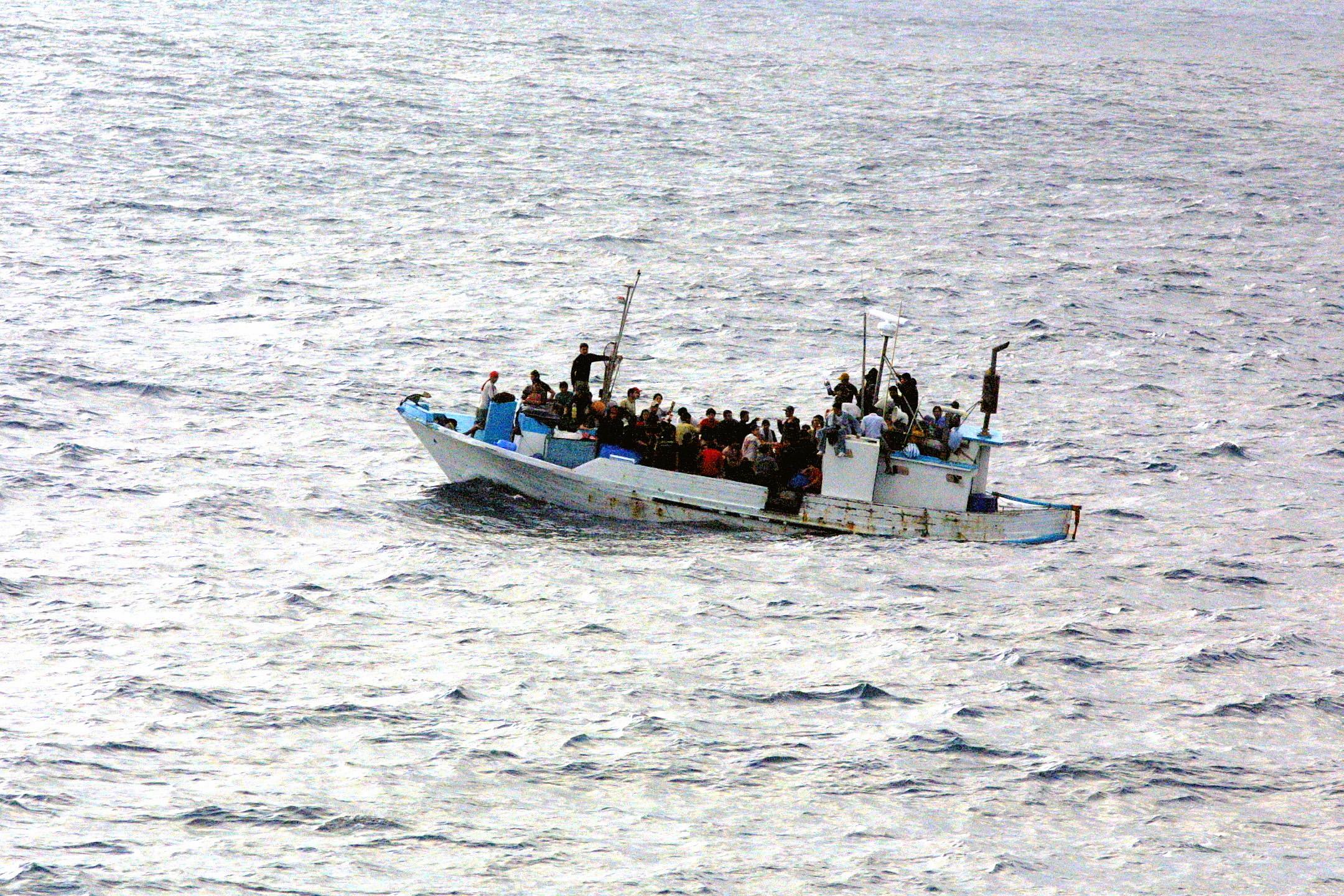
Image: By Alemaugil - Own work, Public Domain, https://commons.wikimedia.org/w/index.php?curid=2956803
Video uploaded from YouTube. I do not own the rights to the video. Uploaded strictly for educational purposes only. All rights reserved to the
copyright holder(s).

Monday, June 20, 2016

ECA (Speaking) I (A): 日本に難民の必要

Hello!


How are you? Let's think about refugees (難民) and what they need for immigration (移住).

Refugees have many problems, and many things they need. Watch this video. It's mostly in Japanese, but with some English, with Japanese subtitles  (日本語の字幕).


Watch the video as many times as you need to. When you are finished, answer these questions in your notebook about the different parts of the video (you can make notes in English or Japanese):

日本のメッセージ
1. What did the first woman say about coming to Australia as a refugee?
2. What did the second woman say about communication between the government (政府) and refugees?

シンポジウムから待たヒント
What did Ishii-san say about the two women's refugee stories?

日本にできること
What did Moriya-sensei from Hokkaido Educational University (北海道教育大学) say about the needs of refugees?

長野県松本市の取り組み
What did Takizawa-sensei from Toyo Eiwa Women's University graduate school (東洋英和女学院大学大学院) say about help for refugees in Matsumoto city in Nagano (長野県松本市)?

求められる視点
What did Daniel Alkhal (ダニエル・  アルカル ) from the UNHCR (国連難民高等弁務官事務所) say about the three different steps of support refugees need?

Make these notes in your notebook. Again - you can make these notes in Japanese or English.

We will talk more about refugees in Japan - for example, what they need in our towns and cities, and your opinions on how we can make them feel they can be a part of Japanese society.

I hope this is interesting for you.

Take care!

Video uploaded from YouTube. I do not own the rights to the video. Uploaded for classroom use only. All rights reserved to the owner(s).

Monday, July 6, 2015

ECA (Speaking) II (All): 日本に難民の必要

Hello!

File:Evstafiev-travnik-refugees.jpg

How are you? Let's think about our opinions about refugees (難民) and what they need for immigration (移住).

Refugees have many problems, and many things they need. Watch this video. It's mostly in Japanese, but with some English, with Japanese subtitles  (日本語の字幕).

Watch the video as many times as you need to. When you are finished, answer these questions in your notebook about the different parts of the video (you can make notes in English or Japanese):

日本のメッセージ
1. What did the first woman say about coming to Australia as a refugee?
2. What did the second woman say about communication between the government (政府) and refugees?

シンポジウムから待たヒント
What did Ishii-san say about the two women's refugee stories?

日本にできること
What did Moriya-sensei from Hokkaido Educational University (北海道教育大学) say about the needs of refugees?

長野県松本市の取り組み
What did Takizawa-sensei from Toyo Eiwa Women's University graduate school (東洋英和女学院大学大学院) say about help for refugees in Matsumoto city in Nagano (長野県松本市)?

求められる視点
What did Daniel Alkhal (ダニエル・  アルカル ) from the UNHCR (国連難民高等弁務官事務所) say about the three different steps of support refugees need?

Make these notes in your notebook. You can make these notes in Japanese or English.

We will talk more about refugees in Japan - for example, what they need in our towns and cities, and your opinions on how we can make them feel they can be a part of Japanese society.

I hope this is interesting for you.

Take care!

Video uploaded from YouTube. I do not own the rights to the video. Uploaded for classroom use only. All rights reserved to the owner(s).

Thursday, July 2, 2015

ECA (英語基礎表現) I (Super A): 日本に難民の必要

Hello!


How are you? Let's think about our opinions about refugees (難民) and what they need for immigration (移住).

Refugees have many problems, and many things they need. Click on this link to watch a video about the needs of refugees to come to Japan. The video is in both English (with Japanese subtitles - 日本語の字幕and Japanese.

Watch the video as many times as you need to. When you are finished, answer these questions in your notebook about the different parts of the video (you can make notes in English or Japanese):

日本のメッセージ
1. What did the first woman say about coming to Australia as a refugee?
2. What did the second woman say about communication between the government (政府) and refugees?

シンポジウムから待たヒント
What did Ishii-san say about the two women's refugee stories?

日本にできること
What did Moriya-sensei from Hokkaido Educational University (北海道教育大学) say about the needs of refugees?

長野県松本市の取り組み
What did Takizawa-sensei from Toyo Eiwa Women's University graduate school (東洋英和女学院大学大学院) say about help for refugees in Matsumoto city in Nagano?

求められる視点
What did Daniel Alkhal (ダニエル・  アルカル ) from the UNHCR (国連難民高等弁務官事務所) say about the three different steps of support refugees need?

Make these notes in your notebook. You can make these notes in Japanese or English.

We will write a short paper about refugees in Japan - for example, what they need in our towns and cities, and your opinions on how we can make them feel they can be a part of Japanese society. There will be other ideas and things you can also write about with refugees as a topic - I'll support you on what you can do.

I hope this is interesting for you.

Take care!

Image: "Mae La refugee camp" by Mikhail Esteves from Bangalore, India - Mae La Refugee Camp. Licensed under Creative Commons Attribution 2.0 via Wikimedia Commons - http://commons.wikimedia.org/wiki/File:Mae_La_refugee_camp.jpg#mediaviewer/File:Mae_La_refugee_camp.jpg
Video uploaded from YouTube. I do not own the rights to the video. Uploaded for classroom use only. All rights reserved to the owner(s).

Thursday, December 4, 2014

特別ポスト「欧米」: 日本に難民の必要

Hello to my Obei students,


How are you? Today let's start our special topic - about refugees (難民) and what they need for immigration (移住).

Refugees have many problems, and many things they need. Click on this link to watch a video about the needs of refugees to come to Japan. The video is in both English (with Japanese subtitles - 日本語の字幕) and Japanese.

Watch the video as many times as you need to. When you are finished, answer these questions in your notebook about the different parts of the video (you can make notes in English or Japanese):

日本のメッセージ
1. What did the first woman say about coming to Australia as a refugee?
2. What did the second woman say about communication between the government (政府) and refugees?

シンポジウムから待たヒント
What did Ishii-san say about the two women's refugee stories?

日本にできること
What did Moriya-sensei from Hokkaido Educational University (北海道教育大学) say about the needs of refugees?

長野県松本市の取り組み
What did Takizawa-sensei from Toyo Eiwa Women's University graduate school (東洋英和女学院大学大学院) say about help for refugees in Matsumoto city in Nagano?

求められる視点
What did Daniel Alkhal (ダニエル・  アルカル ) from the UNHCR (国連難民高等弁務官事務所) say about the three different steps of support refugees need?

Make these notes in your notebook. You can make these notes in Japanese or English.

For Speaking II (A):
We will then start making presentations about refugees - for example, what they need in our towns and cities, and how we can make them feel they can be a part of Japanese society.

For 英語基礎表現 II (Super A): 
We will write a short paper about refugees in Japan - for example, also what they need in our towns and cities, and how we can make them feel they can be a part of Japanese society. There will be other ideas and things you can also write about with refugees as a topic - I'll support you on what you can do.

I hope this is interesting for you. Take care!

Image: "Mae La refugee camp" by Mikhail Esteves from Bangalore, India - Mae La Refugee Camp. Licensed under Creative Commons Attribution 2.0 via Wikimedia Commons - http://commons.wikimedia.org/wiki/File:Mae_La_refugee_camp.jpg#mediaviewer/File:Mae_La_refugee_camp.jpg
Video uploaded from YouTube. I do not own the rights to the video. Uploaded for educational purposes only. All rights reserved to the owner(s).