Welcome!

Welcome!
Showing posts with label オーストラリア. Show all posts

Sunday, December 9, 2018

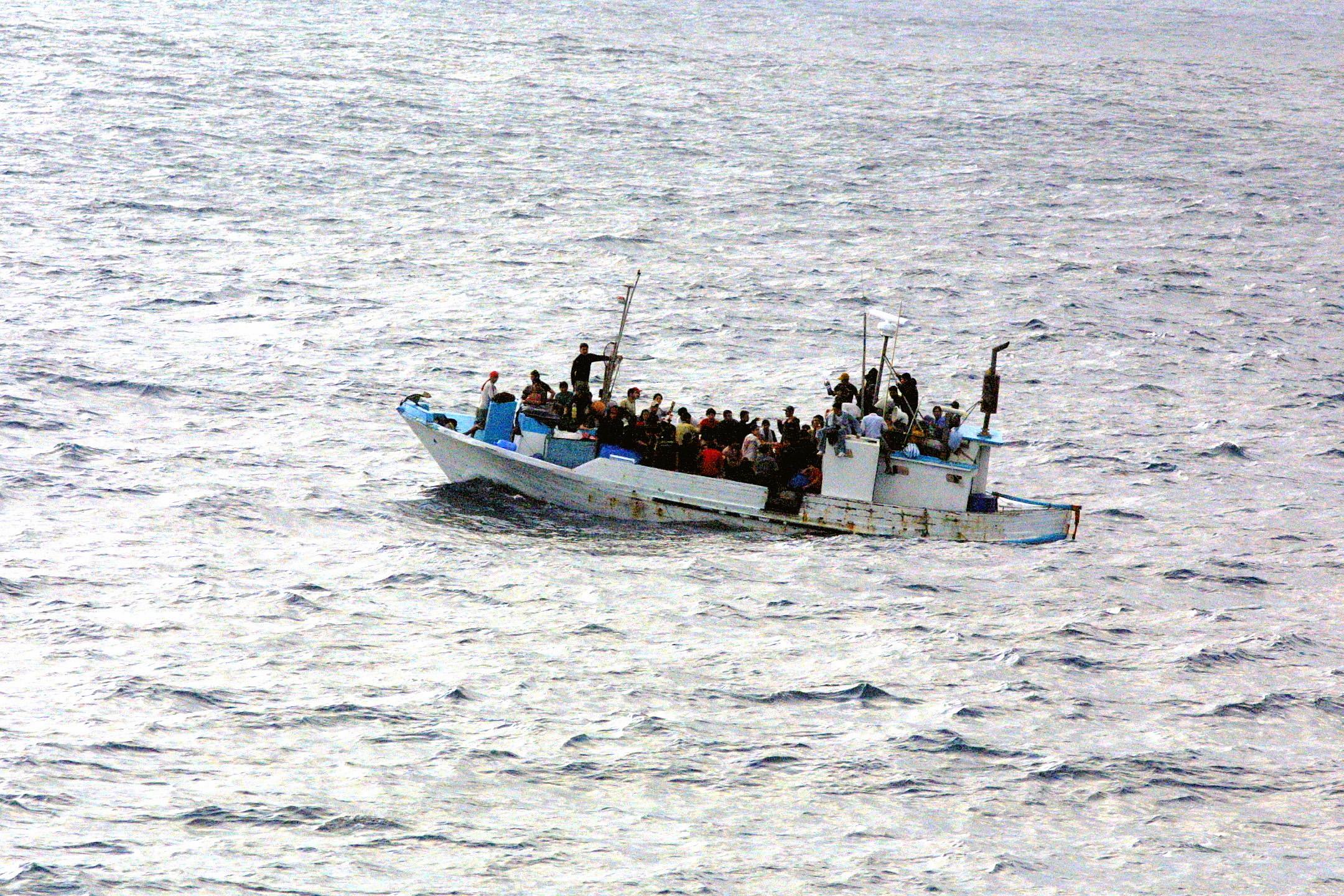
東京理科大学 A英3: Supporting post for writing assignment 6 - about refugees・作文6のサポートポスト「難民について」

Hello!


How are you? Here is a special post to go with our 6th writing assignment (作文6) - your opinions about refugees (難民) and what they need for immigration (移住).

If you want to refresh yourself about the 6th writing assignment, click on this link to check it. 


Support & preparation (準備

If you choose to write about this topic, here is some support for you

I've chosen this topic as one thing you can do because Japan lets in very few refugees, but because the Japanese population is getting older, greater refugee admission may be one thing the Japanese government will have to look at in the near future to keep up the working population. 


Video 1:

Refugees have many problems, and many things they need. Watch this video. It's mostly in English, but with Japanese subtitles (日本語の字幕). 


Watch the video as many times as you need to. When you are finished, answer these questions in your notebook about the different parts of the video (you can make notes in English or Japanese). 

You do not have to show me these notes - they are for you, to get more of a background about the topic and sense of what the issue is. 

日本のメッセージ

1. What did the first woman say about coming to Australia as a refugee?
2. What did the second woman say about communication between the government (政府) and refugees?

シンポジウムから待たヒント

What did Ishii-san say about the two women's refugee stories?

日本にできること

What did Moriya-sensei from Hokkaido Educational University (北海道教育大学) say about the needs of refugees?

長野県松本市の取り組み

What did Takizawa-sensei from Toyo Eiwa Women's University graduate school (東洋英和女学院大学大学院) say about help for refugees in Matsumoto city in Nagano (長野県松本市)?

求められる視点

What did Daniel Alkhal (ダニエル・アルカル ) from the UNHCR (国連難民高等弁務官事務所) say about the three different steps of support refugees need?

Make these notes in your notebook. You can make these notes in Japanese or English. 


Video 2

Now here is another video, but this time with no questions. It's also a TV Tokyo report, about refugees from Burma (Myanmar) who are now living and working in Tokyo as nail artists. 

This may also give you some more background about what some refugees who have re-settled in Japan are able to do. 


Task 
Now look at your notes and write 3-4 paragraphs about what you think of refugees and their needs, especially in coming to Japan.

If you believe that refugees should not come to Japan, give your reasons why.


I know this is a deeper topic than what some of you have done before - so as I say in my blogposts about hikikomori and our 6th writing assignment, I can give some extra points to you for trying for this topic. 


Good luck! I look forward to reading your great writing about this issue if you choose to write about it. 


Take care!


Image: By DFID - UK Department for International Development - Children are the amongst the most vulnerable refugees, CC BY 2.0, https://commons.wikimedia.org/w/index.php?curid=30786740  Video uploaded from YouTube. I do not own the rights to the video. All rights reserved to the copyright holder(s). Uploaded for educational purposes only. 

Sunday, December 2, 2018

東京理科大学 A英1: Interesting sports・面白いスポーツ

Hello!


How are you? Today, let's look at some interesting sports in some different countries

Activity/homework 

Watch these videos, and answer these questions in your notebooks. 

First - here's a video of a popular sport in Ireland called hurling. What do you think of it? It's a very fast sport - so watch it more than once! What other sport is hurling like? 


Now answer this question: What skills do you think you need for hurling? 

Next - here's a sport some of you may have heard of from Thailand - muay thai. What do you think of it? It's also fast - so watch the video more than once! What other sports is muay thai like? 


Now answer this question: What skills do you think you need for muay thai?

Finally - this is a sport I watched as a child in Australia - Australian rules football. What do you think of it? It's another fast sport - so watch it more than once! What other sports is Australian football like? 


Now answer this question: What skills do you think you need for Australian football? 

Have fun! See you next time!


Image: By Flickerd - Own work, CC BY-SA 4.0, https://commons.wikimedia.org/w/index.php?curid=63288605
Videos uploaded from YouTube. I do not own the rights to the videos. Uploaded for educational purposes only. All rights reserved to the copyright holder(s).

Thursday, June 15, 2017

電気通信大学 AWE I: Writing assignment 2 (Leaving Home, Going Home)・作文2

Hello!


How are you? Let me show you our 2nd writing assignment - your opinions about refugees (難民), what they need for immigration (移住), and what you think of their chances of Japan as a new location for their lives. 

While I have given you the handout about the assignment, I am posting it here, with the video that will go with the assignment. 

I am gathering writing on his topic into a book called Leaving Home, Going Home - this is a book about student writing on refugee issues. The best of your writing on this topic could go into this book, so write to the best you can!

How much to write 
I would like you to write as much as you can, because your work may be published (出版した) on both this blog and in the Leaving Home, Going Home book.

I would like to see maybe 3-4 paragraphs' worth of writing.

Deadline (締め切り)
It will be June 23nd (6/23), so I want you to bring in a first draft (下書き) next week (来週) in your notebooks in pencil. Then you can write to the finish and turn in your work on 6/23.

Preparation (準備)
Refugees have many problems, and many things they need. Watch this video. It's mostly in Japanese, but with some English, with Japanese subtitles  (日本語の字幕). 

Watch the video as many times as you need to. When you are finished, answer these questions in your notebook about the different parts of the video (you can make notes in English or Japanese):

日本のメッセージ
1. What did the first woman say about coming to Australia as a refugee?
2. What did the second woman say about communication between the government (政府) and refugees?

シンポジウムから待たヒント
What did Ishii-san say about the two women's refugee stories?

日本にできること
What did Moriya-sensei from Hokkaido Educational University (北海道教育大学) say about the needs of refugees?

長野県松本市の取り組み
What did Takizawa-sensei from Toyo Eiwa Women's University graduate school (東洋英和女学院大学大学院) say about help for refugees in Matsumoto city in Nagano (長野県松本市)?

求められる視点
What did Daniel Alkhal (ダニエル・  アルカル ) from the UNHCR (国連難民高等弁務官事務所) say about the three different steps of support refugees need?

Make these notes on the planning and preparation handout I have given you.

Task 
Most important: Choose one (1) of the following:
Make a one-sided argument for why refugees should be allowed to resettle in Japan.
Or - a one-sided argument for why refugees should not be allowed to resettle in Japan.

Now look at your notes. Choose one (1) of the one-sided arguments above and write 3-4 paragraphs.

Good luck! I look forward to reading your great writing about these issues.

Take care!

Image: By Alemaugil - Own work, Public Domain, https://commons.wikimedia.org/w/index.php?curid=2956803
Video uploaded from YouTube. I do not own the rights to the video. Uploaded strictly for educational purposes only. All rights reserved to the
copyright holder(s).

Thursday, November 24, 2016

ECA (英語基礎表現) II (P): 面白いスポーツ

Hello!


How are you? Today let's look at some different sports in different countries. 

First - here's a video of a popular sport in Ireland called hurling. What do you think of it? It's a very fast sport - so watch the video more than once! What other sports is hurling like?


Next - here's a sport some of you may have heard of from Thailand - muay thai. What do you think of it? It's also fast - so watch the video more than once! What other sports is muay thai like? 


Finally - this is a sport I watched as a child in Australia - Australian rules football. What do you think of it? It's another fast sport - so watch it more than once! What other sports is Australian football like?


Activity/homework 
Watch these videos, and answer these questions in your notebooks:

1. What equipment and skills do you think you need for hurling?
2. What equipment and skills do you think you need for muay thai?
3. What equipment and skills do you think you need for Australian rules football?

Have fun!


Image: By Hmlarson - Own work, CC BY-SA 3.0, https://commons.wikimedia.org/w/index.php?curid=26330634/from Wikimedia Commons.
Videos uploaded from YouTube. I do not own the rights to the videos. Uploaded for educational purposes only. All rights reserved to the copyright holder(s).

Wednesday, October 26, 2016

ECA (Speaking) I (All): 面白いスポーツ

Hello!


How are you? Today let's look at some different sports in different countries. 

First - here's a video of a popular sport in Ireland called hurling. What do you think of it? It's a very fast sport - so watch the video more than once! What other sports is hurling like?


Next - here's a sport some of you may have heard of from Thailand - muay thai. What do you think of it? It's also fast - so watch the video more than once! What other sports is muay thai like? 


Finally - this is a sport I watched as a child in Australia - Australian rules football. What do you think of it? It's another fast sport - so watch it more than once! What other sports is Australian football like?


Activity 

Get together in a group or with a partner. One person choose one (1) video and watch it - then describe (描写して) to your groups' members or partner what is happening in it, how the sport is played, and so on. 


Then when you're finished - the group members or partner watch(es) the same video and check if the person's description (描写) is right! Give points to the person for the best description. 

Have fun!


Image: By Hmlarson - Own work, CC BY-SA 3.0, https://commons.wikimedia.org/w/index.php?curid=26330634/from Wikimedia Commons.
Videos uploaded from YouTube. I do not own the rights to the videos. Uploaded for educational purposes only. All rights reserved to the copyright holder(s).

Monday, June 20, 2016

ECA (Speaking) I (A): 日本に難民の必要

Hello!


How are you? Let's think about refugees (難民) and what they need for immigration (移住).

Refugees have many problems, and many things they need. Watch this video. It's mostly in Japanese, but with some English, with Japanese subtitles  (日本語の字幕).


Watch the video as many times as you need to. When you are finished, answer these questions in your notebook about the different parts of the video (you can make notes in English or Japanese):

日本のメッセージ
1. What did the first woman say about coming to Australia as a refugee?
2. What did the second woman say about communication between the government (政府) and refugees?

シンポジウムから待たヒント
What did Ishii-san say about the two women's refugee stories?

日本にできること
What did Moriya-sensei from Hokkaido Educational University (北海道教育大学) say about the needs of refugees?

長野県松本市の取り組み
What did Takizawa-sensei from Toyo Eiwa Women's University graduate school (東洋英和女学院大学大学院) say about help for refugees in Matsumoto city in Nagano (長野県松本市)?

求められる視点
What did Daniel Alkhal (ダニエル・  アルカル ) from the UNHCR (国連難民高等弁務官事務所) say about the three different steps of support refugees need?

Make these notes in your notebook. Again - you can make these notes in Japanese or English.

We will talk more about refugees in Japan - for example, what they need in our towns and cities, and your opinions on how we can make them feel they can be a part of Japanese society.

I hope this is interesting for you.

Take care!

Video uploaded from YouTube. I do not own the rights to the video. Uploaded for classroom use only. All rights reserved to the owner(s).

Thursday, May 19, 2016

ECA (Speaking) I (C, W, & A): シドニーのフリーマーケット

Hello! 


How are you? Today let's take a look at a flea market at Bondi Beach in Sydney. This is a short video taken by a Japanese person on a homestay in Australia. Is this like a flea market in Japan (or your country)?

Look at the video. Turn the sound off. How many things can you see and write down the words for in the time of the video?


Have fun! 


Image: By AngMoKio - Own work, CC BY-SA 3.0, https://commons.wikimedia.org/w/index.php?curid=15066912/Image courtesy of Wikimedia Commons. All rights reserved. 

Saturday, April 19, 2014

週1・2・3 特別ポスト - ECA (英語基礎表現) I (Super A): answers to your pre-teaching survey questions

Hello to my Super A students!


How are you? Here I will try to answer your questions from your pre-teaching surveys.

One student asked me what Japanese food I liked. Well, I like many Japanese dishes, but my favorite one might be unagi. I love unagi! I love the richness of the sauce for it, and the softness of the meat. But it's expensive, and high in calories, so I don't eat it so much. Once in a while, however, I like to have it!

The same student also asked me what surprised me about Japanese culture and customs the first time I came here. Well, I think it might have been how people take any chance they can to take their shoes off. I knew that people took their shoes off at home, but I didn't know that people also sometimes took their shoes off in restaurants. That surprised me! In the U.S., you don't do this, and anybody who did take their shoes off, even under the table, would get very strange looks from people.

This student also asked me this question: "If you got much money you can't use out, what would you use (it for)?" That's an interesting question I didn't expect! I guess what the student means is what I would do if I didn't have enough money to go out somewhere. (I hope that's what this person means!)

Hmm…I think that if I didn't have enough money to go somewhere, but maybe had a little to spend on something, I would rent a DVD of a movie I really like, cook a nice meal, then watch the movie at home.


Another student asked me if I had been to China. I am sorry to say that I have not been to China, though I now know some people from there and would be interested in going. This student also asked if I had been to Thailand, because I had a picture from there on my welcome blogpost.

Well, I am also sorry to say that I have not been to Thailand. The picture on my welcome post was from the Internet. One time, I looked around on the Internet for pictures of different greetings (挨拶) from different cultures, and I found the one from Thailand. I thought it was a great picture, very charming, of Thai people greeting each other in the typical wai, which is common in Thailand. I wish I had taken this picture!

One other student also asked me if I liked Japan, and what kind of place here I liked, and didn't like. Well, I have lived here now for 17 years, so it's home to me anymore! As far as places I like here, I have to say that Tokyo has always been a world in itself here. It has so many parts to it that are unique, and that I can explore with imagination.

As far as other parts of Japan I like, I have to say I also like the Karuizawa area in summer. It's very comfortable and relaxing. I also like the coastal and beach towns along the JR Yokosuka line going down to Kamakura, like Zushi and Hayama. I feel that I'm really on the Pacific Ocean in those places, and I like being near the coast. I come from Idaho in the U.S., and it's landlocked, with no ocean. So I love being near big water!

For places I don't like…well, I find Omiya to be mostly uninteresting. I like Urawa so much better, because it has more character to it. I also have to say that I don't like Tsukuba in Ibaraki so much, because I lived there for six years and it was kind of boring. Whenever I had a chance, I would go to Kashiwa in Chiba, or Tokyo. Kashiwa is a nice small city I moved to and lived in for three years after I got married and left Tsukuba.


One more student asked me how old I was, and where I was from. Well, I was born in California in the U.S. in 1962, so I am now 52 years old. (I just had my birthday on April 8th!) I lived in Australia for nine years, from when I was almost three years sold until I was almost 12 years old, then we moved back to the U.S., to Idaho, in the Pacific Northwest of the U.S. I went to junior high school and high school, then later university, in Idaho.

Finally, one more student asked me if I was a Christian. Well, I am not a church-going one, so I'm afraid I'm not one to ask about the Bible. But here at Seigakuin, there are many people who are very knowledgable about the Bible, and whom students can ask many rich and interesting questions to.

That's all for now! Please keep your questions coming! At any time, please feel free to post comments and questions.

See you in class!