Welcome!

Welcome!

Friday, December 5, 2014

週10・11・12 - ECA (Speaking) I & II (J, D & A):移民

Hello!  


How are you? Today I'd like to introduce a new topic to you about immigrants (移民) - people from one country who move to live in another country.  

Look at these pictures. Can you guess who are Japanese, and who are not Japanese? For the ones who are not Japanese - what are their countries? 
1.

2.

3.
File:Berzoini125494.jpg

4.

5.

6.

See you next class!

Images: Top - By Jean Colemonts/http://commons.wikimedia.org/wiki/File%3AJapanese_Brazilian_Miko_Curitiba_Paran%C3%A1.jpg/1."Akemi Barbara Katsuki" by Hardworking/http://upload.wikimedia.org/wikipedia/commons/7/75/Akemi_Barbara_Katsuki.jpg /2. "OFeldman, Tokyo, 2012" by Ofer Feldman- Own work/http://commons.wikimedia.org/wiki/File:OFeldman,_Tokyo,_2012.jpg#mediaviewer/File:OFeldman,_Tokyo,_2012.jpg/3. Berzoini125494/Ryan Higa by Gage Skidmore/http://commons.wikimedia.org/wiki/File:Berzoini125494.jpg#mediaviewer/File:Berzoini125494.jpg/4. Gage Skidmore/http://upload.wikimedia.org/wikipedia/commons/b/b8/Ryan_Higa_by_Gage_Skidmore.jpg/5. By norio nakayama (Flickr: 大宮アルディージャ vs 清水エスパルス @ NACK5スタジアム)/http://upload.wikimedia.org/wikipedia/commons/5/5f/Dido_Havenaar%2C_assistant_coach_for_Shimizu_S-Pulse.jpg/6. By Cristiano Sant´Anna/http://upload.wikimedia.org/wikipedia/commons/3/3b/Michio_Kaku-cropped.jpg/All images courtesy of Wikimedia Commons. I do not own the rights to these images. Uploaded for educational purposes only.

Thursday, December 4, 2014

特別ポスト「欧米」: 日本に難民の必要

Hello to my Obei students,


How are you? Today let's start our special topic - about refugees (難民) and what they need for immigration (移住).

Refugees have many problems, and many things they need. Click on this link to watch a video about the needs of refugees to come to Japan. The video is in both English (with Japanese subtitles - 日本語の字幕) and Japanese.

Watch the video as many times as you need to. When you are finished, answer these questions in your notebook about the different parts of the video (you can make notes in English or Japanese):

日本のメッセージ
1. What did the first woman say about coming to Australia as a refugee?
2. What did the second woman say about communication between the government (政府) and refugees?

シンポジウムから待たヒント
What did Ishii-san say about the two women's refugee stories?

日本にできること
What did Moriya-sensei from Hokkaido Educational University (北海道教育大学) say about the needs of refugees?

長野県松本市の取り組み
What did Takizawa-sensei from Toyo Eiwa Women's University graduate school (東洋英和女学院大学大学院) say about help for refugees in Matsumoto city in Nagano?

求められる視点
What did Daniel Alkhal (ダニエル・  アルカル ) from the UNHCR (国連難民高等弁務官事務所) say about the three different steps of support refugees need?

Make these notes in your notebook. You can make these notes in Japanese or English.

For Speaking II (A):
We will then start making presentations about refugees - for example, what they need in our towns and cities, and how we can make them feel they can be a part of Japanese society.

For 英語基礎表現 II (Super A): 
We will write a short paper about refugees in Japan - for example, also what they need in our towns and cities, and how we can make them feel they can be a part of Japanese society. There will be other ideas and things you can also write about with refugees as a topic - I'll support you on what you can do.

I hope this is interesting for you. Take care!

Image: "Mae La refugee camp" by Mikhail Esteves from Bangalore, India - Mae La Refugee Camp. Licensed under Creative Commons Attribution 2.0 via Wikimedia Commons - http://commons.wikimedia.org/wiki/File:Mae_La_refugee_camp.jpg#mediaviewer/File:Mae_La_refugee_camp.jpg
Video uploaded from YouTube. I do not own the rights to the video. Uploaded for educational purposes only. All rights reserved to the owner(s).

Wednesday, December 3, 2014

週10・11・12 - ECA (英語基礎表現) II (Super A) & (Speaking) II (A):人物、場合

Hello!


How are you? Today I would like to introduce a new topic about people and situations.

Look at the picture above. Who is this person? Where do you think he is? What do you think he's doing? Talk about this with your classmates. Make some notes about it.

Now do the same with these two following pictures. Who are the people in the pictures? What are they doing? Where are they going? Where might they be coming from? Talk about these, and make some notes in your notebooks about them.

File:Evstafiev-travnik-refugees.jpg


See you next time!

Thursday, November 27, 2014

特別ポスト - ECA (英語基礎表現) II (Super A): Word document formatting

Hello!


How are you? Here is the format I would like you to use for your Word files. Please take a look at this example:


すべて左揃え
Hiroshi Seigakuin
Basic Communicative English II (Super A)
November 27, 2014
すべて左揃え                                                            ダブルスペース
I want your first paragraph to look like this. It should be written in single-space Times New Roman, 12-point size, all in black. This is so that it is easy to read, because if it is easy to read, your ideas are easier to understand. Remember that when you write, your own ideas have to be easy for yourself to understand, because you have to make your own writing clear to yourself so other people can then understand them too. But do not forget to also have a double space after the end of the first paragraph before you begin your second paragraph.
すべて左揃え                                            ダブルスペース                          
I want your second paragraph to look like this. It should also have clear formatting and be written in Times New Roman, 12-point size. It should keep the ideas from the first paragraph going and build them up, or show your topic in a new way but keep the same theme so your ideas are still clear and understandable. Please also remember that if you have another paragraph after this, you should have a double space.
すべて左揃え                                        ダブルスペース                   
If you have a third paragraph, it should also look the same as your first and second paragraphs, and be written in Times New Roman, 12-point size, with a concluding sentence. What is a concluding sentence? The concluding sentence is like a summary (要約) of your topic or theme. 

So when you send your Word file, please have it look like this on the page. 

Thank you! I'll look forward to reading yet more wonderful writing from all of you. 

See you next week! 

Image: "Teenager Guy Working on Laptop" courtesy of imagerymajestic/FreeDigitalPhotos.net

週9・10・11 - ECA (Speaking) I & II (All, J, D & A): 道を教える

Hello,


How are you? Let's talk about directions (方向)!    

Activity
Look at these pictures. They are the directions to Seigakuin from a train station, but the pictures are not in the right order (違う順番). With a group or a partner, can you put these pictures in the right order? 

When you are finished, can you talk about these directions? Here is some language you can use for the order (順番) of the directions: 

First...    go straight...    down this street...    turn right...    turn left...   

next to the...    between (the)...    across from (the)...    at (the corner)...    

on the left...    on the right...     

Try it! This is the first picture


A. #1

B. 

C. 

D. 

E. 

F. 

G. 

H. 

I. 

J. 

K. 

Homework/Activity
Take 4-5 pictures of the way from your train station to your home - or draw a picture of the way from your train station to your homeBring them to the next class and show your classmatesTalk about your directions from your station to your home.


Have fun!


All images personal photos/all rights reserved

Wednesday, November 12, 2014

週7~10 - ECA (英語基礎表現) II (Super A): writing about music (Part 2)

Hello,


How are you? Here is Part 2 about the pieces of music I had played in class for you. 

Keep going through the paragraphs you wrote in class on the music you heard. You have listened to the first two pieces of music - now here are the other two pieces of music. 

Here - click on this link to see a video about the third piece of music I played for you - Miles Davis' "Portia." 


If you want to know more about Miles Davis, click here to read a Wikipedia article (in Japanese) about him. 


Now - click on this link to see a video clip of the fourth piece of music I played for you - Frank Zappa's "Little Umbrellas."  


If you want to know more about Frank Zappa, click here to read a Wikipedia article (in Japanese) about him. 


Does seeing images to the music, or reading more about the artists, change your feelings or images about them? Write some comments to this blog post about them!


See you next time!


Image photographed from DVD cover for purposes of subject illustration. I do not own the rights to this image. All rights reserved to the owner(s).

週7~10 - ECA (英語基礎表現) II (Super A): writing about music (Part 1)

Hello,


How are you? Do you remember the four pieces of music I played for you in class? We'll do something more with them now! This is a Part 1 post - Part 2 will follow.

I would like you to go through your paragraphs about those pieces of music, and listen to the first two pieces of music again - and this time to click on some videos of the first two artists whose pieces of music I played. I also have information links you can click on about these artists. 

Would these video images, and reading about these musicians, change your ideas about what you wrote? 


First - below is a link about the first piece of music you heard - Jacques Loussier and his version of J.S. Bach's "Siciliano in G Minor."  


Click here for a video clip of Jacques Loussier and this Bach piece I played for you in class. 


If you want to know more about Jacques Loussier, click here for a Wikipedia article (in Japanese) about him. 


Next - here is the second piece of music you heard - Ronny Jordan and his song "After Hours." 


Click here for a video clip of Ronny Jordan playing the music I played for you in class. 


If you want to know more about Ronny Jordan, click here also for a Wikipedia article (in Japanese) about him. 


What do you think of these musicians? Does seeing the artists' pictures or some image connected to the music, or reading about them on Wikipedia, change your own images of the music? 
Write comments on this blog post about what you think!

Hope you enjoyed listening to them again.


See you next time!


Image: "On The Stage" courtesy of George Stojkovic/FreeDigitalPhotos.net

Monday, October 27, 2014

特別ポスト: スピーキング練習のプレゼンテーションポスターズ

Hello!


How are you? Today I would like to show you some examples of the presentation posters you did on the topic of things that make you healthy and happy. These posters show your best advice on what you do to be healthy and happy, and what you believe over people can do too. 

You did a great job on these and I'm proud of your work. So here is a small gallery of your posters!


Good work and great job! Thank you for your hard work on the presentations, and I'll see you soon!

Thursday, October 16, 2014

週1~5 - ECA (英語基礎表現) II (Super A): writing about places (Part 2)

Hello,


How are you? Do you remember the pictures I showed you in Part 1? I will now show you these pictures again, but with some links to background information about them.

Look at the picture above again. It looks like an ordinary country house or barn on the outside, but it has a unique story to it. Click on this link for more, and on this link here about the picture. 

Look at this next picture. It looks like a quiet beach now, but it was once a place where great history was made. Click on this link to find out more about this place.


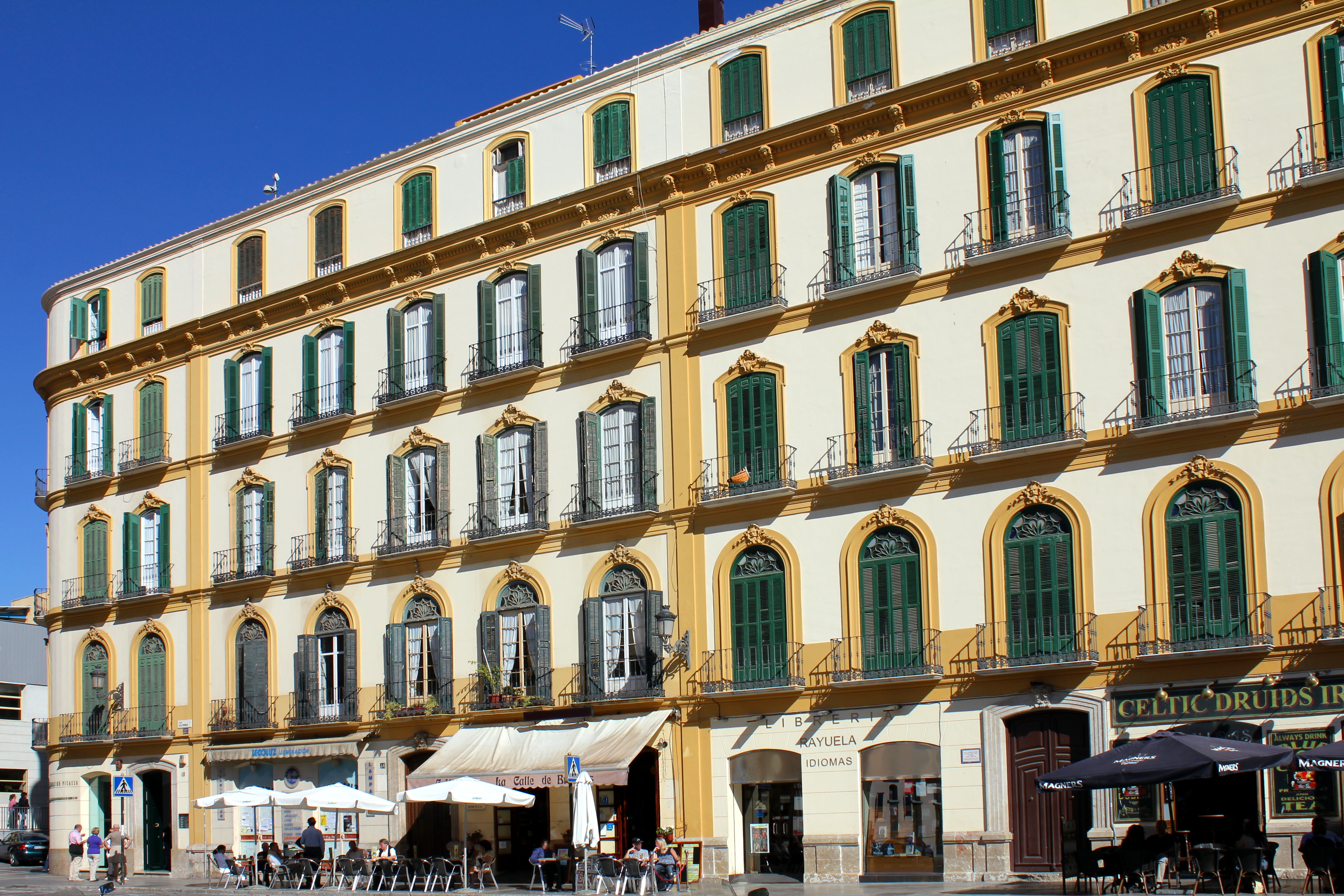
Now look at this next picture again. This was the birthplace of a famous person from the 20th century. Click on this link here to find out about who the person was. 


Finally, while this final place has people in the picture, the place is very important. Click on the link here to find out more, and click on this link about the two people in the picture. 


I hope these are interesting for you. 

See you next time!

Images: Top photo - "Arromanches" by Bulo78 - Own work. Licensed under Creative Commons Attribution-Share Alike 3.0-2.5-2.0-1.0http://commons.wikimedia.org/wiki/File:Arromanches.jpg#mediaviewer/File:Arromanches.jpg/Barn - "Pollock-barn" by Dmadeo - Own work. Licensed under Creative Commons Attribution-Share Alike 3.0 http://commons.wikimedia.org/wiki/File:Pollock-barn.jpg#mediaviewer/File:Pollock-barn.jpg/Building - Picasso’s birthplace - By Dominik (Own work) [CC-BY-SA-3.0 (http://creativecommons.org/licenses/by-sa/3.0) or GFDL (http://www.gnu.org/copyleft/fdl.html)], via Wikimedia Commons http://upload.wikimedia.org/wikipedia/commons/2/29/Pablo-Picasso-Birthplace.jpg/
Couple - Woodstock couple by Burk Uzzle/image reproduced from file courtesy of Laurence Miller Gallery/laurencemillergallery.com
All images from except Woodstock couple from Wikimedia Commons. All rights reserved. I do not own the rights to these images. All images uploaded for educational purposes only.

特別ポスト: スピーキング練習のプレゼンテーションポスターの例え

Hello,


How are you? Here is a special post. I will show you some examples of poster presentations for speaking. Take a look at the one above! This was from a student from last year.

You can design posters like these for your speaking practices (スピーキング練習). 
Look at some more posters! 


See you next time!