Welcome!

Welcome!

Monday, July 13, 2015

ECA (Speaking) I (C & A): 特別ポスト「移民」

Hello!  


How are you? Today I'd like to introduce a new topic to you about immigrants (移民) - people from one country who move to live in another country.  

Look at these pictures. Can you guess who are Japanese, and who are not Japanese? For the ones who are not Japanese - what are their countries?

1.

2.

3.
File:Berzoini125494.jpg

4.

5.

6.

See you next class!

Images: Top - By Jean Colemonts/http://commons.wikimedia.org/wiki/File%3AJapanese_Brazilian_Miko_Curitiba_Paran%C3%A1.jpg/1."Akemi Barbara Katsuki" by Hardworking/http://upload.wikimedia.org/wikipedia/commons/7/75/Akemi_Barbara_Katsuki.jpg /2. "OFeldman, Tokyo, 2012" by Ofer Feldman- Own work/http://commons.wikimedia.org/wiki/File:OFeldman,_Tokyo,_2012.jpg#mediaviewer/File:OFeldman,_Tokyo,_2012.jpg/3. Berzoini125494/http://commons.wikimedia.org/wiki/File:Berzoini125494.jpg#mediaviewer/File:Berzoini125494.jpg/4. Ryan Higa by Gage Skidmore/http://upload.wikimedia.org/wikipedia/commons/b/b8/Ryan_Higa_by_Gage_Skidmore.jpg/5. By norio nakayama (Flickr: 大宮アルディージャ vs 清水エスパルス @ NACK5スタジアム)/http://upload.wikimedia.org/wikipedia/commons/5/5f/Dido_Havenaar%2C_assistant_coach_for_Shimizu_S-Pulse.jpg/6. By Cristiano Sant´Anna/http://upload.wikimedia.org/wikipedia/commons/3/3b/Michio_Kaku-cropped.jpg/All images courtesy of Wikimedia Commons. All rights reserved to the copyright holders. Uploaded for educational purposes only.

ECA (Speaking) I (W): 将来の予定

Hello!


How are you? University will soon be finished for the year! So what are your plans for the holidays - our Christmas and New Year's break, or spring - or your near future (将来)? For example - look at the picture on top. Are you going to take a trip, such as to Kyoto?  

Activity

What are your plans for the Christmas and New Year's or spring holidays - or your near future? 

Look at these other pictures. Are you going to do any of these things? If not, what would you like to do? 


Are you going (or would you like) to go back to your hometown?  


you going to (or would you like to) go back to your hometow
…or go sightseeing in another country, like Angkor Wat in Cambodia? 
Go sightseeing in another part of Japan? 

...go to the U.S - maybe California? 
Go to the U.S - maybe California? 

Or maybe New York? 


Or maybe New York? 
Or maybe Australia - for example, Sydney? 

Are you going (or would you like) to study abroad (in another country)? Are you going (or would 


Work a part-time job? 
...work a part-time job? 

Talk about these with a partner or group! What are you going to do - or - what would you like to do?


Have fun!

Have fun!
Images: Top - "Kinkakuji Temple, Kyoto, Japan" (courtesy of Worakit Sirijinda)/Cherry blossoms - "Sakura" (courtesy of coward_lion)/Angkor Wat - "Angkor Wat Sunrise" (courtesy of J Frasse)/Sign - "Hollywood Sign" (courtesy of portal)/Statue of Liberty - "Statue of Liberty Face" (courtesy of portal)Sydney Opera House - "Sydney Opera House At Night" (courtesy of Susie B)/People - "Group of Young Students" (courtesy of photostock)/Pizza - "Pizza" (courtesy of federico stevanin)/All photos from FreeDigitalPhotos.net

ECA (Travel English): 春期・期末プレゼンテーションについて

Hello!


How are you? Here is a special post for all of you - some points about your final presentations (期末プレゼンテーション). Here are some rules and points:

Presenting with a partner or presenting alone
You can present with one (1) partner - or present alone. But I have to know next week (7/20) which way you are presenting. 

You can select any partner you want if you want a partner - but remember, only one (1) partner! 

Displays 
You can make posters or a Power Point. My advice is to have 5-6 pictures for a poster - or 7-8 pictures for a Power Point show. 

Remember to put your Power Point show on a USB hard drive!

Information to put on your poster or Power Point 
Here's what you should have in your presentation:

1. Pictures of famous sightseeing spots or places you would like to go to

2. Pictures of historical places (old buildings such as castles, famous houses, shrines or temples, parks -places of interest that you and people would go and see)

3. Pictures of shopping and entertainment areas (for example, Myongdong in Seoul, Times Square or Broadway in New York, Gastown in Vancouver, Motomachi Chugakai in Yokohama, or other areas like these in the places you want to present about) 

4. Pictures of unique or famous food and drink in the places you want to present about

5. Information about travel to these places - airlines and flying times, trains, Shinkansen, buses, and travel times, and access from Haneda or Narita (for example, are there direct flights or trains to the places you are presenting about, or do you have to change planes or trains somewhere?)

Schedule for our last classes 
7/20 - open class time for presentation work, checking by me with advice, comments, or any help you need - plus presentation practice if you can

7/27 -  final presentations

I hope this helps you. Let's get to work - but let's also have fun with these displays!


See you next week!

Images: Top - "Hakone window" (personal photograph)/Bottom - Hagia Sophia (image reproduced from unattributed National Geographic source)/All rights reserved on personal image. I do not own the rights to the National Geographic image. Uploaded for classroom purposes only.  

Sunday, July 12, 2015

ECA (Speaking) I (C, W, & A): 話すと言うことのポシター

Hello!


How are you? Here is the latest collection of great storytelling posters from all of you. Take a look at these and be proud of your work - like this incredible one at the top!

Here are some more of your great posters! Take a look at these - a short kamishibai:


Isn't it great! Now here are some more posters on a love triangle theme!


There were some other stories - like these last two:


Some incredible artwork - and incredible stories! Some great work by all here!

See you next class!

Thursday, July 9, 2015

ECA (Speaking) II (All): 難民、移住のプレゼンテーションポスター

Hello!


How are you today! Here are some examples of posters for presentations on topics about refugees (難民) and immigration (移住).  

Vocabulary 
These are some important key words:

refugee: 難民
immigrant: 移民
immigration: 移住
Japanese-Brazilian: 日系ブラジール人
education: 教育
employment: 雇用
housing: 住宅

There are many other words you can find in your dictionaries, but the words in the list above are a start.

Presentation posters
Here are some examples of posters. They come from my friend, who's a professor (教授) at Chuo University in the law faculty (中央大学法律学科). Look at these:


Take a look at these in detail. Make the pictures of the posters larger
Look at these again. This can give you ideas about how you could do a poster design. 
See you next class!

Image: "Presentation Word" courtesy of Stuart Miles/FreeDigitalPhotos.net

ECA (英語基礎表現) I (Super A): 難民

Hello!

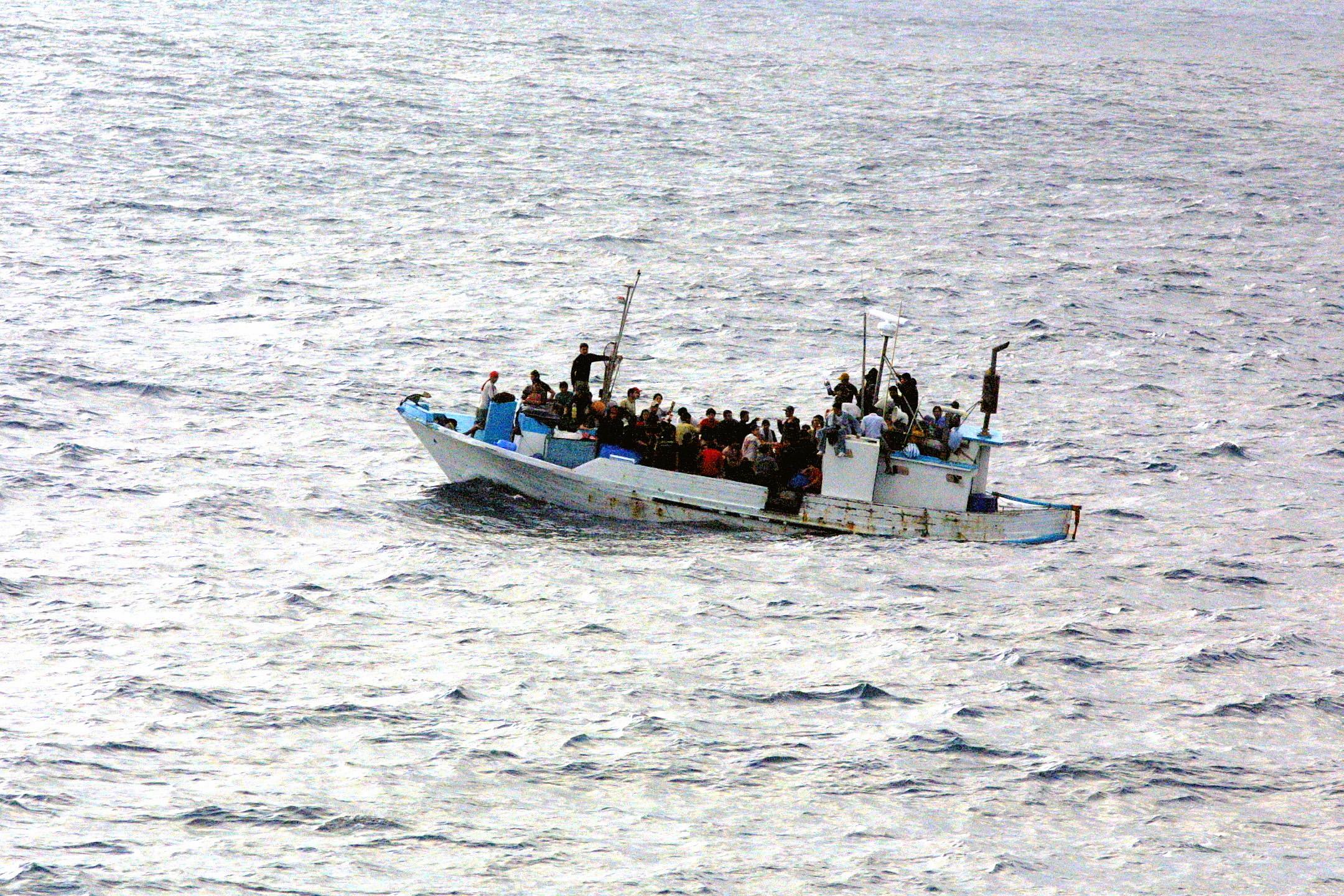
How are you? Today I would like to introduce a new topic about people in difficult situations - such as refugees (難民).

Look at the picture above. What is happening? Where do you think the people are going? Why are they on the boat and why are they leaving where they came from? Talk about this with your classmates. Make some notes about it.

Now do the same with these two following pictures. Who are the people in the pictures? What are they doing? Where are they going? Where might they be coming from? What are they feeling? Talk about these, and make some notes in your notebooks about them.


File:Evstafiev-travnik-refugees.jpg

See you next time!

Monday, July 6, 2015

ECA (Speaking) II (All): 日本に難民の必要

Hello!

File:Evstafiev-travnik-refugees.jpg

How are you? Let's think about our opinions about refugees (難民) and what they need for immigration (移住).

Refugees have many problems, and many things they need. Watch this video. It's mostly in Japanese, but with some English, with Japanese subtitles  (日本語の字幕).

Watch the video as many times as you need to. When you are finished, answer these questions in your notebook about the different parts of the video (you can make notes in English or Japanese):

日本のメッセージ
1. What did the first woman say about coming to Australia as a refugee?
2. What did the second woman say about communication between the government (政府) and refugees?

シンポジウムから待たヒント
What did Ishii-san say about the two women's refugee stories?

日本にできること
What did Moriya-sensei from Hokkaido Educational University (北海道教育大学) say about the needs of refugees?

長野県松本市の取り組み
What did Takizawa-sensei from Toyo Eiwa Women's University graduate school (東洋英和女学院大学大学院) say about help for refugees in Matsumoto city in Nagano (長野県松本市)?

求められる視点
What did Daniel Alkhal (ダニエル・  アルカル ) from the UNHCR (国連難民高等弁務官事務所) say about the three different steps of support refugees need?

Make these notes in your notebook. You can make these notes in Japanese or English.

We will talk more about refugees in Japan - for example, what they need in our towns and cities, and your opinions on how we can make them feel they can be a part of Japanese society.

I hope this is interesting for you.

Take care!

Video uploaded from YouTube. I do not own the rights to the video. Uploaded for classroom use only. All rights reserved to the owner(s).

Sunday, July 5, 2015

ECA (Travel English): 娯楽、場所、イベント

Hello!


Image "Fun At Party" courtesy of ponsuwan/ FreeDigitalPhotos.net
How are you? Let's talk about entertainment (娯楽), places (場所) and events (イベント)! 

When you want to do something on the weekend (Saturday/Sunday), what kinds of places or events would you like to go and see? Look at these places and events. Which ones do you like? Which ones are interesting? Which ones do you like better? Which one do you like the best? Which one is the most interesting? Talk about these places and events! 


例えば:

A: What do you want to do - go to a live concert or an open air market? 
B: Hmm...a live concert. 
A: A live concert? How come? 
B: Because I love live music. How about you? 
A: Well, it's okay, but I think an open air market is more interesting to go to.
B: …

Now try this - look at these pictures. Mix and match them and talk about places and events you would like to go to! 

   a fireworks display


a live concert

 an open-air market


a Japanese street festival 

(no picture)
your own idea(s)!


Have fun!


Images: Top - "Fun At Party" (courtesy of ponsuwan)/Fireworks - "Fireworks" (courtesy of noppasinw)/Musician - "On The Stage" (courtesy of George Stojkovic)/Market - "Shop" (courtesy of Dino De Luca)/Street festival - personal photograph/All attributed pictures from FreeDigitalPhotos.net/Personal image - all rights reserved.  

Thursday, July 2, 2015

ECA (Culture) A: ボディーランゲージ

Hello!


How are you? Today, let's look at body language (ボディーランゲージ). 

I have a video for you here about body language. It's a little long, and in English - but the words are not so important. You can even watch the video with no sound - it might be better if you turn the sound off! Let's watch this, and make some notes while we watch:


What were the body language problems you found in the video? Let's talk about them!

Take care! 
Image: "Thinking Man" (courtesy of Chaiwat)/FreeDigitalPhotos.net
Video upload from YouTube. All rights reserved to the copyright holder(s). Uploaded for educational purposes only. 

ECA (英語基礎表現) I (Super A): 日本に難民の必要

Hello!


How are you? Let's think about our opinions about refugees (難民) and what they need for immigration (移住).

Refugees have many problems, and many things they need. Click on this link to watch a video about the needs of refugees to come to Japan. The video is in both English (with Japanese subtitles - 日本語の字幕) and Japanese.

Watch the video as many times as you need to. When you are finished, answer these questions in your notebook about the different parts of the video (you can make notes in English or Japanese):

日本のメッセージ
1. What did the first woman say about coming to Australia as a refugee?
2. What did the second woman say about communication between the government (政府) and refugees?

シンポジウムから待たヒント
What did Ishii-san say about the two women's refugee stories?

日本にできること
What did Moriya-sensei from Hokkaido Educational University (北海道教育大学) say about the needs of refugees?

長野県松本市の取り組み
What did Takizawa-sensei from Toyo Eiwa Women's University graduate school (東洋英和女学院大学大学院) say about help for refugees in Matsumoto city in Nagano?

求められる視点
What did Daniel Alkhal (ダニエル・  アルカル ) from the UNHCR (国連難民高等弁務官事務所) say about the three different steps of support refugees need?

Make these notes in your notebook. You can make these notes in Japanese or English.

We will write a short paper about refugees in Japan - for example, what they need in our towns and cities, and your opinions on how we can make them feel they can be a part of Japanese society. There will be other ideas and things you can also write about with refugees as a topic - I'll support you on what you can do.

I hope this is interesting for you.

Take care!

Image: "Mae La refugee camp" by Mikhail Esteves from Bangalore, India - Mae La Refugee Camp. Licensed under Creative Commons Attribution 2.0 via Wikimedia Commons - http://commons.wikimedia.org/wiki/File:Mae_La_refugee_camp.jpg#mediaviewer/File:Mae_La_refugee_camp.jpg
Video uploaded from YouTube. I do not own the rights to the video. Uploaded for classroom use only. All rights reserved to the owner(s).

ECA (英語基礎表現) I (Super A): 移民

Hello!  


How are you? Today I'd like to introduce a new topic to you about immigrants (移民) - people from one country who move to live in another country.  

Look at these pictures. Can you guess who are Japanese, and who are not Japanese? For the ones who are not Japanese - what are their countries? 
1.

2.

3.
File:Berzoini125494.jpg

4.

5.

6.

See you next class!

Images: Top - By Jean Colemonts/http://commons.wikimedia.org/wiki/File%3AJapanese_Brazilian_Miko_Curitiba_Paran%C3%A1.jpg/1."Akemi Barbara Katsuki" by Hardworking/http://upload.wikimedia.org/wikipedia/commons/7/75/Akemi_Barbara_Katsuki.jpg /2. "OFeldman, Tokyo, 2012" by Ofer Feldman- Own work/http://commons.wikimedia.org/wiki/File:OFeldman,_Tokyo,_2012.jpg#mediaviewer/File:OFeldman,_Tokyo,_2012.jpg/3. Berzoini125494/http://commons.wikimedia.org/wiki/File:Berzoini125494.jpg#mediaviewer/File:Berzoini125494.jpg/4. Ryan Higa by Gage Skidmore/http://upload.wikimedia.org/wikipedia/commons/b/b8/Ryan_Higa_by_Gage_Skidmore.jpg/5. By norio nakayama (Flickr: 大宮アルディージャ vs 清水エスパルス @ NACK5スタジアム)/http://upload.wikimedia.org/wikipedia/commons/5/5f/Dido_Havenaar%2C_assistant_coach_for_Shimizu_S-Pulse.jpg/6. By Cristiano Sant´Anna/http://upload.wikimedia.org/wikipedia/commons/3/3b/Michio_Kaku-cropped.jpg/All images courtesy of Wikimedia Commons. All rights reserved to the copyright holders. Uploaded for educational purposes only.

Wednesday, July 1, 2015

ECA (Speaking) I (C, W, & A): 話と言うことポスターの例え

Hello!


How are you? Here is a supporting post for you about story presentation posters. The picture at the top here comes from a student poster from last year. Isn't it great?


These are examples of some story posters. Here is the poster with the picture at the top: 


Here's another one, in two parts. It doesn't use the pictures like the ones I have uploaded on the blogpost I showed you this week, but students' own pictures:


That was a great one! Now here's another with the same kinds of pictures I have in the blogpost from this week! 


That's an interesting one! There are many I could show here, but I thought I would give some small examples of student work. 

Take care! See you next time!